Abduction and Adduction

I always have a great time when I teach the anatomical terminology of  movement because students find it so easy to engage with the material. In my Science of Skeletons class I began experimenting with a charades-style activity that required students to quickly learn anatomical directions, motions, and  broad regions (e.g. the appendicular versus axial skeleton). However, one distinction that often trips students up is differentiating between abduction and adduction.

THOR, GOD OF ANATOMICAL MOVEMENTS

Abduction means movement away from the sagittal plane of the body (or, for fingers and toes, movement away from the midline of the hand or foot).

Adduction refers to movement towards the sagittal plane of the body (or, for fingers and toes, movement towards the midline of the hand or foot).

However because the words are so similar in their spelling, students often forget which term goes with which movement. My fool-proof mnemonic trick for differentiating between the two terms is as follows:

In the summer, when you want to show off your abs at the beach, you keep your arms as far away from your body as possible because it’s so hot out.

In the winter, in constrast, you want to add extra layers to your wardrobe, and you keep your arms close to your body because it is so cold.

I think about ABduction as the process of moving your limbs away from your body when it’s hot out, and ADDuction as the process of keeping your limbs close to your body when it’s cold.
THOR, GOD OF ANATOMICAL MOVEMENTS 2
Does anyone else have any creative tricks that they use to differentiate abduction and adduction? Feel free to share tips in the comments!

References:
White, T. D. and P.A. Folkens. (2005) The Human Bone Manual. Elsevier, Amsterdam.

Image Credits: Thor abducting his arm while holding Mjölnir found here, Thor adducting his arm while looking pensive found here. Thor abducting his arm while showing of his abs found here, delighted Thor wearing a cloak found here.

Posted in Anatomy, Bioarchaeology Vocab | Tagged , , , , , , , , , , , , , | 5 Comments

Osteology Everywhere: Michigan Breweries Edition

This has been my first full summer in Michigan, so all of my time not spent teaching or engaged in course prep has been spent on the road, exploring what this state has to offer when temperatures are above freezing. I made a point of visiting as many breweries as I could, to take some tours and soak in as much of the Michigan beer scene as possible before fall hits.

Storm over Marshall

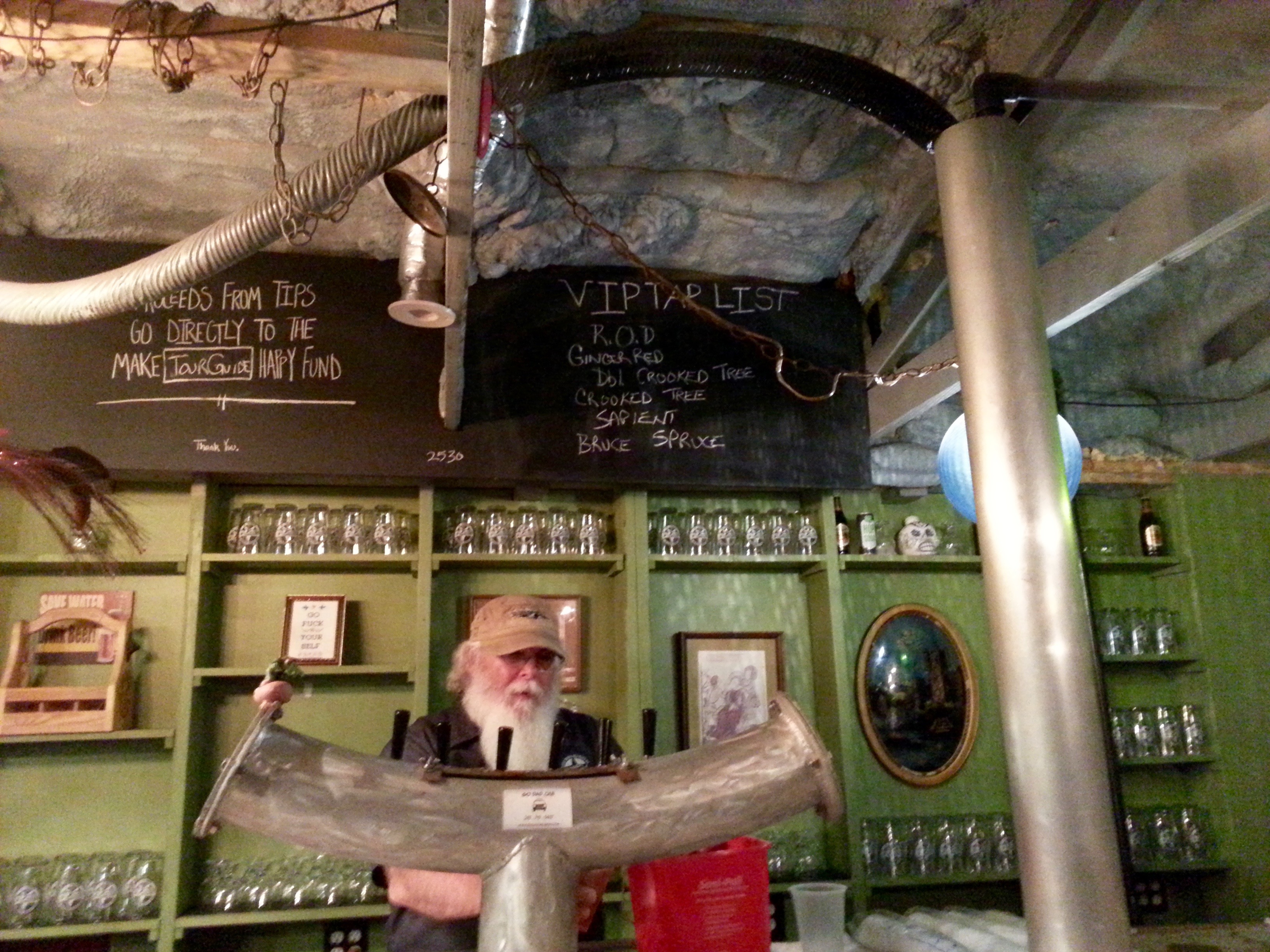
First up was Dark Horse, in Marshall, MI. We arrived to find an ominously darkening sky, but the garrulous tour master (with a poorly sculpted blob-like skull visible on the shelf behind him) soon put us at our ease.

Brewery tastingWe asked our tour guide what his favorite offering was, and he told us that he particularly enjoyed Sapient Trip, a Belgian style Tripel that’s a dangerously sweet 9.5% ABV. I liked it as much for the taste as for the label, an osteologically appropriate rendering of the Grim Reaper:

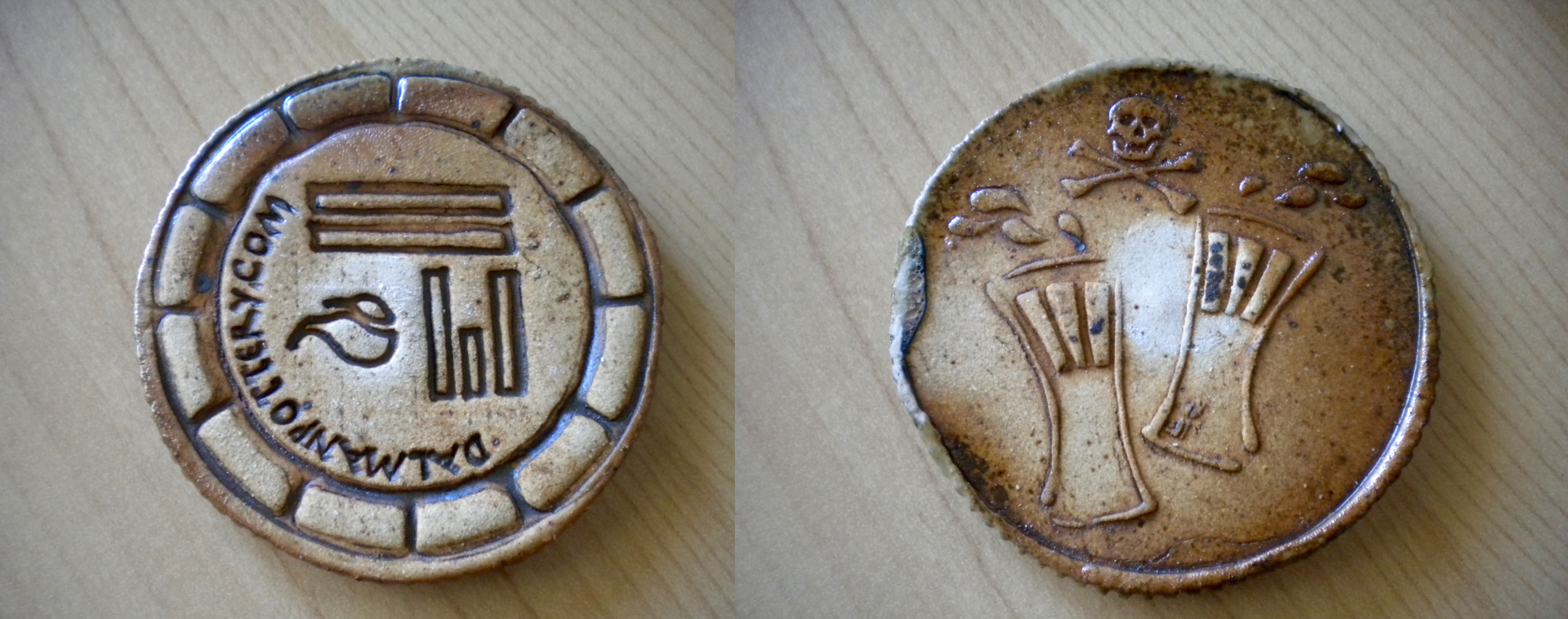
Dark-Horse-Sapient-Trip-Belgian-TrippelOur guided tour of the facilities was the first of the day, and we took the opportunity to interrogate the guide about a number of other aspects of brewery operations. I was particularly curious about the ceramic mugs that adorn the the tap room – they’re clustered so closely together that in some places you can’t even see the actual walls of the buliding. Apparently the regulars at Dark Horse join the brewery mug club by purchasing the beautifully crafted handmade vessels. When we asked the tour guide where they were from he gave us the potter’s business card – a large ceramic token etched with his website on one side, and a tiny skull and cross bones floating over a few pints of beer on the other!

Dark Horse token

My next stop a few weeks later was in the town of Mt. Pleasant, about halfway up the Mitten. I was making my way to Traverse City for the longest vacation of my summer – a staggering 2 and 1/2 days. I’d decided to make a brief detour to central Michigan because  there’s a beer called Train Wreck I’ve always enjoyed when down south, and I wanted to take a gander at the brewery that produced it.

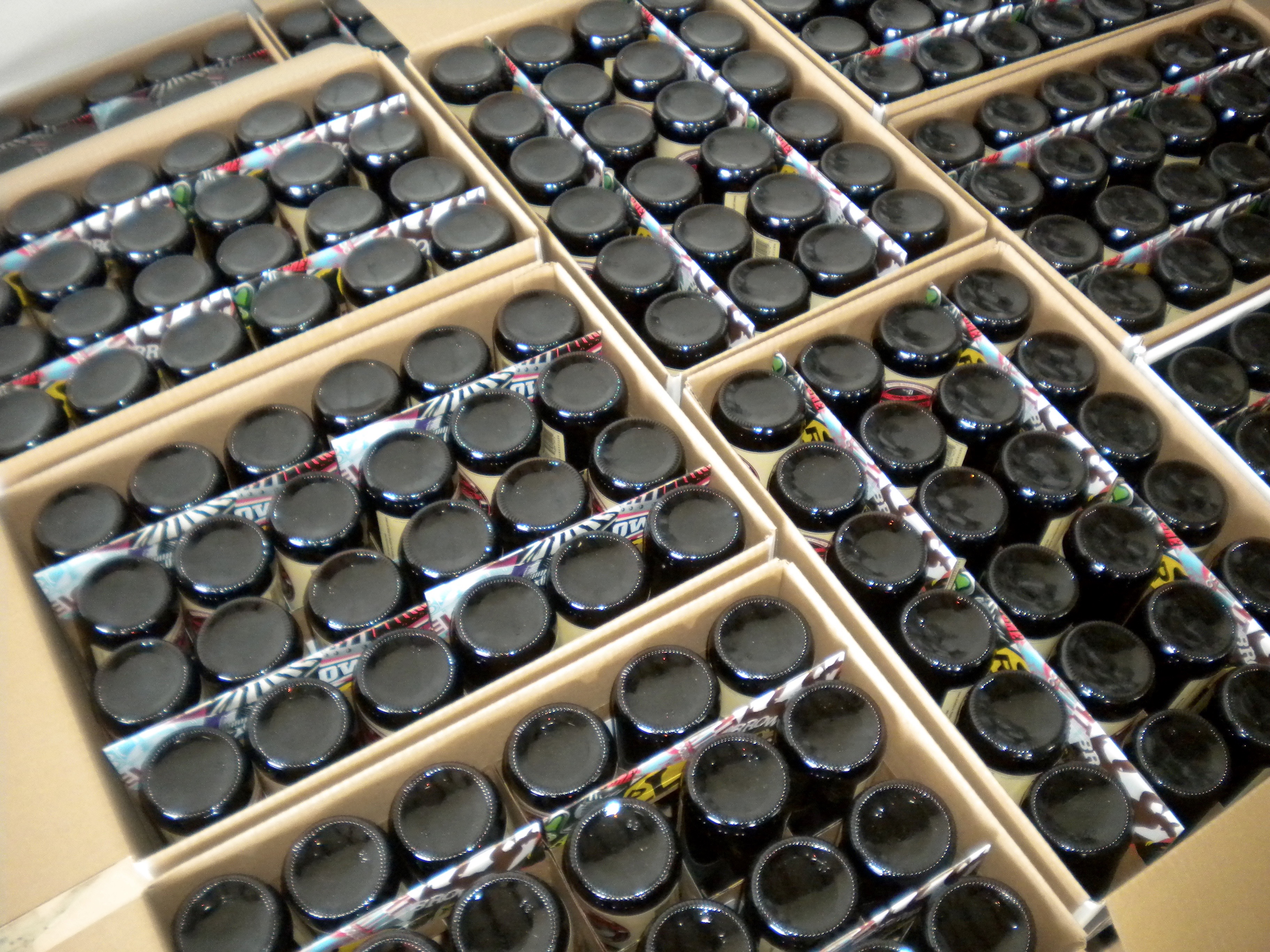
Mountain Town Brewing Co. Stock
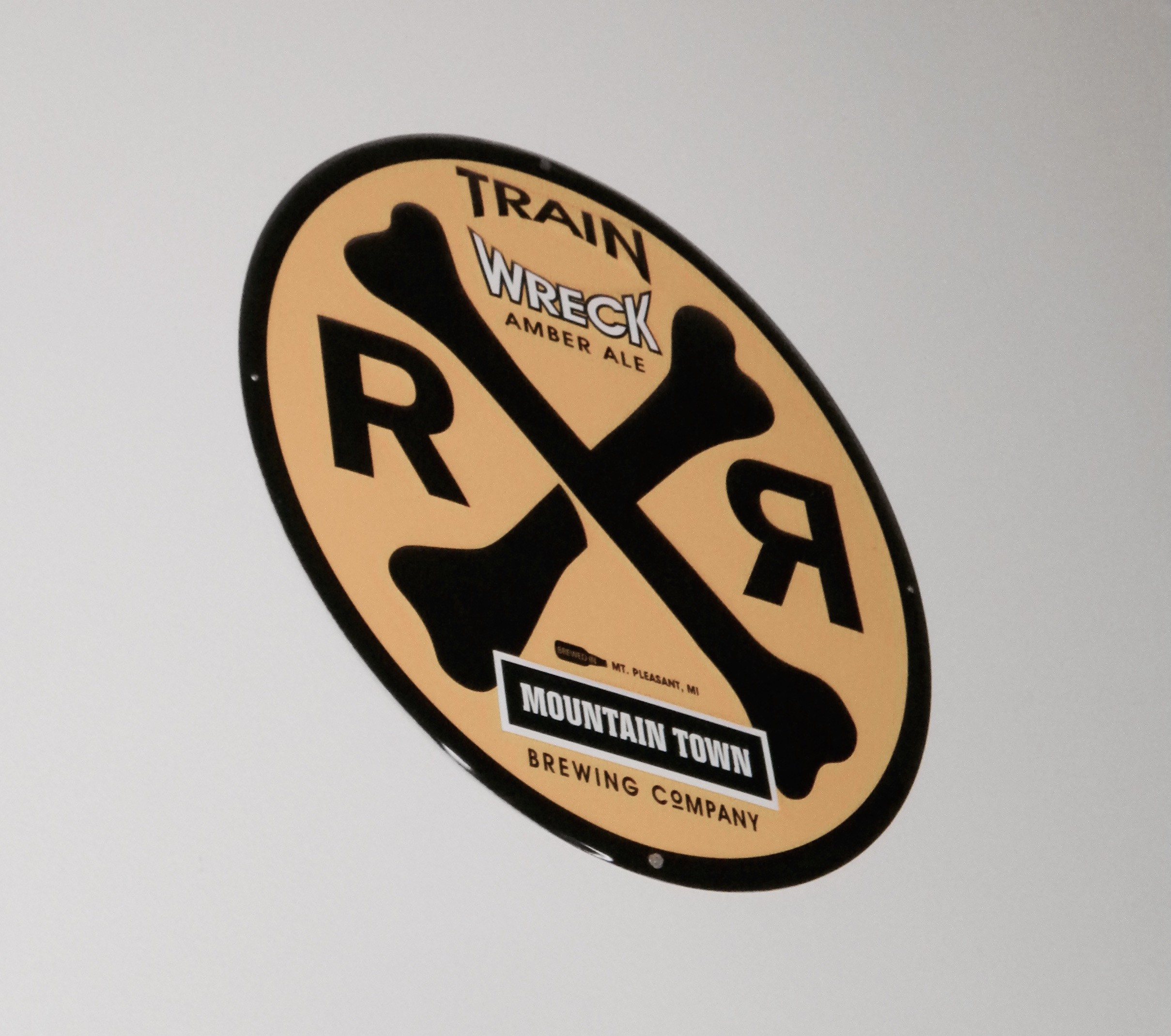
Mountain Town Brewing Co. was a lot of fun – there are always two bartenders staffing the bar, and when business wanes they’ll take you back into the brewery itself to give you a brief tour. They’ve also come up with an innovative solution to the problem of indecisive drinkers. If you don’t know what you want, there’s a gameshow style wheel that the staff will spin to choose a beer for you! In addition to their creativity and friendliness, I have to give them props for the amorphously osteologically-themed logo that decorates their signature beer. I don’t know what kind of long bones these are, but hey, at least they’re bones?


When I finally made it to Traverse City, I had a clear agenda: Rare Bird, Short’s, Right Brain and North Peak. Of the four breweries Right Brain was by far my favorite. The location was beautiful:

Right Brain View
The staff and tour guide were personable and engaging, their kitchen made sandwiches that substituted waffles for bread, and TWO of their beers had osteology themed labels. The first, Dead Kettle, was one of their IPAs:

Dead Kettle IPA The second, Spinal Tapper, is one of their slightly higher ABV offerings. I love the label because in addition to including the sacrum, the artist faithfully added in some lumbar lordosis and thoracic kyphosis to capture the curvature of the human spine.

Spinal Tapper
Did I mention they also have a cherry pie beer  and a porter made from smoked pig bones? What with the hints of osteology popping up repeatedly and lots of excellent beer, I was quite a happy bioarchaeologist.

Mangalitsa Pig Porter and Cherry Pie Whole samples
I hope you all have had the chance to pursue some similarly excellent adventures in whatever part of the world you’re spending your summer!

Image Credits:
 Sapient Trip Ale label from beerpulse.com, here. Dead Kettle label from beerpulse.com, here.

Posted in Osteology Everywhere, Travel | Tagged , , , , , , , , , , , | 2 Comments

Osteology Everywhere: Ikea Edition

A few weeks ago I headed to Ikea with one of my graduate colleagues who had never visited the Swedish furniture emporium before. While there, we discovered an awesome skeletally-themed twin bedspread.

Ikea twin bedspread

We also found out that I had dressed particularly appropriately that day – my tank top was a near perfect match (though a bit megalocephalic):

Ikea bedspread with t-shirt
Unfortunately they did not sell the bedspread for adults. I checked.

Posted in Bioarchaeology, Osteology Everywhere | Tagged , , , | 3 Comments

Osteology Everywhere: Innominate Edition

Two weeks ago, during our second week of The Science of Skeletons, I covered the osteological estimation of sex and bioarchaeological approaches to reconstructing gender in the past. Unsurprisingly, that was the week I started to see ossa coxae everywhere I looked.

First, while walking the canine domesticate I was dog-sitting, I noticed these seed pods (I think they may be maple, but I would like a botanist to confirm as I rarely deal with recently living things). To my eye, they looked like narrow and elongated chimpanzee innominates:

P. troglodytes ilia

The resemblance even held when they were “articulated”; however, the articulated pelvis that they form is so wide that a graduate colleague of mine remarked on its resemblance to earlier hominin pelves (like the Gona pelvis, the Homo erectus specimen shown below):

The Gona Pelvis

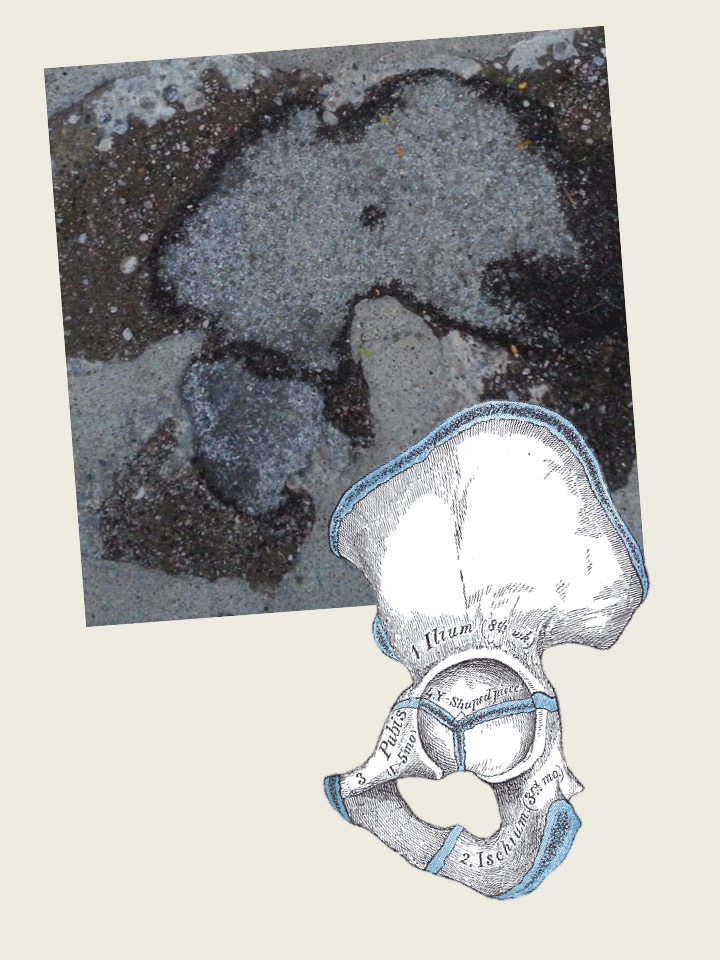
Then, I found a giant innominate in a patch in the sidewalk pavement. Some of the features are a little distorted, but overall the resemblance is pretty clear:

It may be that teaching for 6 hours a week is starting to addle my brain, but I definitely see an innominate.I’ve clearly got bones on the brain, as is also evidenced by the fact that this is just the first of a series of upcoming Osteology Everywhere posts, so if you’re waiting with bated breath for the next installment….well, I’ll let Ray Arnold say it for me.

P.S. I also just discovered that the “Remove Background” tool exists in the figure editing panel in PowerPoint. This is a BIG DEAL. Look forward to lots more examples of floating bones in the near future.

UPDATE: My pedantic and bony pelvis-obsessed colleague Caroline VanSickle informs me that the correct latin plural for os coxae is ossa coxae, a distinction I never fail to forget (I always remember that the plural is atypical, but I also always forget its exact nature. This is why I prefer the term innominates). Also, the helicopter seed pods are maple. Good job everyone!

Image Credits: Original figure of innominate from Gray’s, here. Original chimpanzee ilium (P. troglodytes) found here. Gona pelvis found here.

Posted in Osteology Everywhere, Pelvis | Tagged , , , , , | 3 Comments

Responses Needed for Public Archaeology and Blogging Survey!

I recently received an email from Fleur Schinning, an archaeology enthusiast pursuing a Master’s in Heritage Management at Leiden University in the Netherlands. She’s writing her thesis on the use of blogs and social media and how they contribute to the accessibility of archaeology in the Netherlands. In particular, she is examining American and British archaeology blogs in order to better understand how blogging in archaeology contributes to public archaeology.

I’m answering some questions for her as a blogger, but she’s also curious about blog readers. If you are a regular reader and have the time she’d appreciate anyone filling out the 26 question survey. It’s worth noting that most of the questions are multiple choice, and the survey shouldn’t take more than five minutes to complete.

The link to the google questionnaire is here: http://goo.gl/forms/z3BAUTyYUL
And here is a pdf of all of the questions if you would like to review them before starting the survey: Schinning questionnaire for blog readers

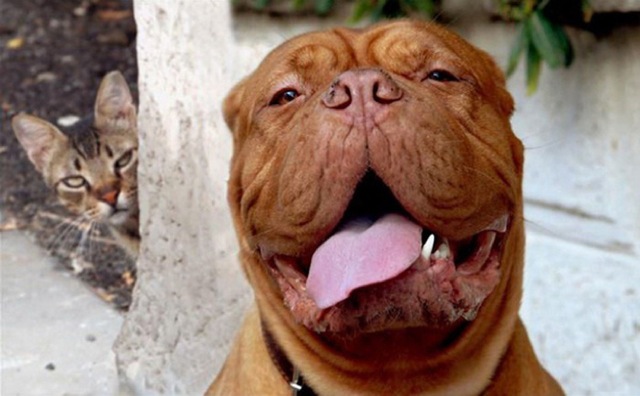
As heartfelt thanks to you for supporting public archaeology research, I offer you this photograph of an amusing animal:

It's_Me

Fleur, stepping the thanks game up a notch, offers entry into a drawing to win six free issues of Archaeology magazine. So if you need more incentive to participate, look no further!

Image Credits: Grinning dog found here.

Posted in Archaeology, Blogging | Tagged , , , , | 1 Comment

Supination

.

I am definitely this excited about the course. I have yet to establish whether the students share my boundless enthusiasm given that the classes start at 9am.

I recently started teaching my first self-designed course at the University of Michigan, an intro to bioarchaeology class titled The Science of Skeletons. We had our first meeting last Thursday, and in addition to demonstrating the appropriate way to handle human skeletal remains and treating my students to a rapid-fire summary of the basics of bone biology, I decided that they needed to learn some anatomical terminology. We covered regions of the human skeleton (cranial, post-cranial, axial, appendicular), skeletal planes (coronal, sagittal, transverse) anatomical directions (anterior, posterior, proximal, distal, medial, lateral) and some of the movements of the human body.

One of the terms I introduced was supination. This directional term refers explicitly to the movements of the hand, and is the counter-movement to pronation (when your palm is turned down as if typing). Supination occurs when you turn your hand so that the palm faces up, as if begging for something. I have always remembered this by relating it to begging: “Your hand is in supination when your palm is up in supplication.”

David Tenniers III - Saint Valentine Kneeling  (in supplication) - 1600s

Here, a kindly angel assists Saint Valentine, who has apparently forgotten how to supinate his hand.

However, one of my graduate colleagues pointed out that “supplication” is not necessarily an easy everyday word to remember if you’re not a medieval Christian. He told me that one of his instructors had once used the mnemonic “sup?” to teach students about supination, because that’s the position young gentlemen hold their hands in when asking how things are going or when concisely summarizing their lack of concern for their opponent’s point of view.

“SUP?”

So, the mnemonic trick here is to remember that “When you’re asking “sup?”, your hands are in supination”. In the gif above, The Fresh Prince is shown in the process of supinating his hands. Were he to carry the motion through fully, his hands would be horizontal, with palms facing up. Jon Stewart, a master of supination given the number of times he throws up his hands at the American political circus, demonstrates below:


Image Credits
: First skeleton in graduation cap found here. Tenniers painting of St. Valentine found here. Fresh Prince gif found here. Jon Stewart from salon.com, here.

Posted in Anatomy, Bioarchaeology Vocab, Osteology | Tagged , , , | 4 Comments

Splanchnocranium

I’ve been reading a lot of research on the bioarchaeology of violence of late, thought-provoking  pieces by Haagen Klaus, Deb Martin and Gwen Robbins Schug that detail the ways in which the ideology of oppression is mediated by violence. In theory, this leaves me spending a lot of time thinking about how structural violence has molded human social interactions since complex, multi-tiered societies first arose. In practice, this means I’ve spent a lot of time sitting in cafés and poking parts of my skull while furrowing my brow, palpating the paths of blunt and sharp force trauma described in text.

This past weekend, in the midst of my phrenological investigations, I ran across an unfamiliar anatomical term. In their 2012 paper examining violence at Harappa, Schug et al., described the pattern of trauma presented by individual II.S.5:

This individual also demonstrates destructive, remodeling lesions from an extensive infection affecting the frontal, parietals and the occipital bones. Circular, crater-shaped lesions are most severe near the left coronal suture. In addition to these healed fractures in the splanchnocranium, II.S.5 has vertical fractures in the right and left central and lateral incisors and canines” (142).

Reading this, I realized that I had no idea what to palpate, because I didn’t know what a splanchnocranium was. At first blush it sounds like the name of a heavy metal band from the 1970s.

THIS IS SPLANCHNOCRANIUM

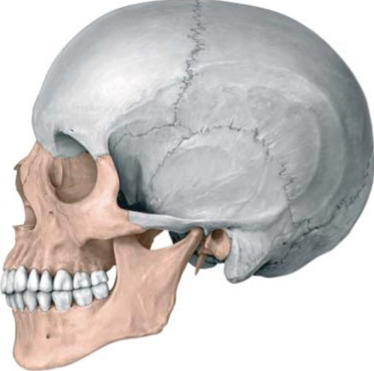
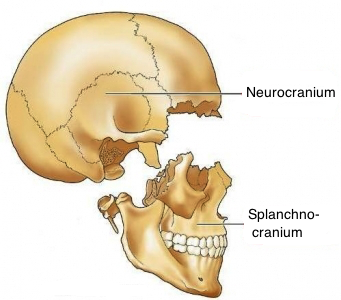
While I maintain that this is a missed musical opportunity ripe for exploitation, what splanchnocranium actually refers to is the facial skeleton. Phylogenetically speaking, the splanchnocranium reflects our evolutionary history since it represents the part of the skull that develops from the pharyngeal arches (the structures that go on to become gills in fish).

Splanchnocranium shown in red.

Splanchnocranium shown in red.

In practical osteological terms this means the splanchnocranium, or viscerocranium, includes all of the bones of the face (generally including mandible, maxilla, malars, and the finicky fragile little bones of the face like the nasals, vomer, lacrims, conchae, etc.,):


There appears to be some debate about which bones are considered part of the facial skeleton – sometimes the sphenoid and ethmoid are included, and sometimes they’re considered part of the neurocranium. If you’re looking for explict evo-devo links, this website from the University of the Cumberlands provides a detailed run down of which arches become which bones. And there you have it – the splanchnocranium!

References:
ResearchBlogging.orgSchug, G.R., K. Gray, V. Mushrif-Tripathy, and A.R. Sankhyan (2012). A Peaceful Realm? Trauma and Social Differentiation at Harappa International Journal of Paleopathology, 2 (2-3), 136-147
 
 
Image Credits: Spinal tap photo found here. Blue and red cranium found here. Original separated skull photo found at studydroid, here.

Posted in Anatomy, Bioarchaeology Vocab, Osteology | Tagged , , , , , | 2 Comments

Pop Culture Osteology: Scandal

scandal_promo

I was recently unwinding by watching Scandal, a show that I think about entirely in capslock. INTRIGUE. OLIVIA POPE. SUSPENSE. THINGS BEING HANDLED.

Sample quote: “My mother blew up the church that’s costing you your presidency.”

As you can tell, this level of drama makes for pretty excellent television, even despite the objectively terrible romantic choices the female protagonist consistently makes.

Her romantic decisions are questionable, but her snack game is on point.

Olivia’s romantic decisions are questionable, but her snack game is on point.

One of my favorite actors on the show is Joe Morton, a man noteworthy for his absolutely impeccable delivery. He makes every statement he utters an Old Testament pronouncement of unescapable impending doom. Even when ordering pizza I’m sure his toppings preferences are communicated with all of the gravitas of an Othello soliloquy:

Pizza Specialist: And what do you want on that?

Rowan: The. ONLY. thing. WORTHY. ofsuchameal. the. only. thing. ANYONE. couldpossiblychoose. in. THIS. situation.

Pizzeria Employee: I’m sorry?

Rowan: PEPPERONI.

Unsurprisingly, he's also a big proponent of tough love.

Unsurprisingly, he’s also a big proponent of tough love.

A few nights ago, I was watching the last episode of the third season, in preparation for finally starting the fourth season. I know, I know, I’m behind the times, but I don’t have a real TV. By the time I finally watch all of Game of Thrones, George R.R.Martin may have actually written the sixth book.

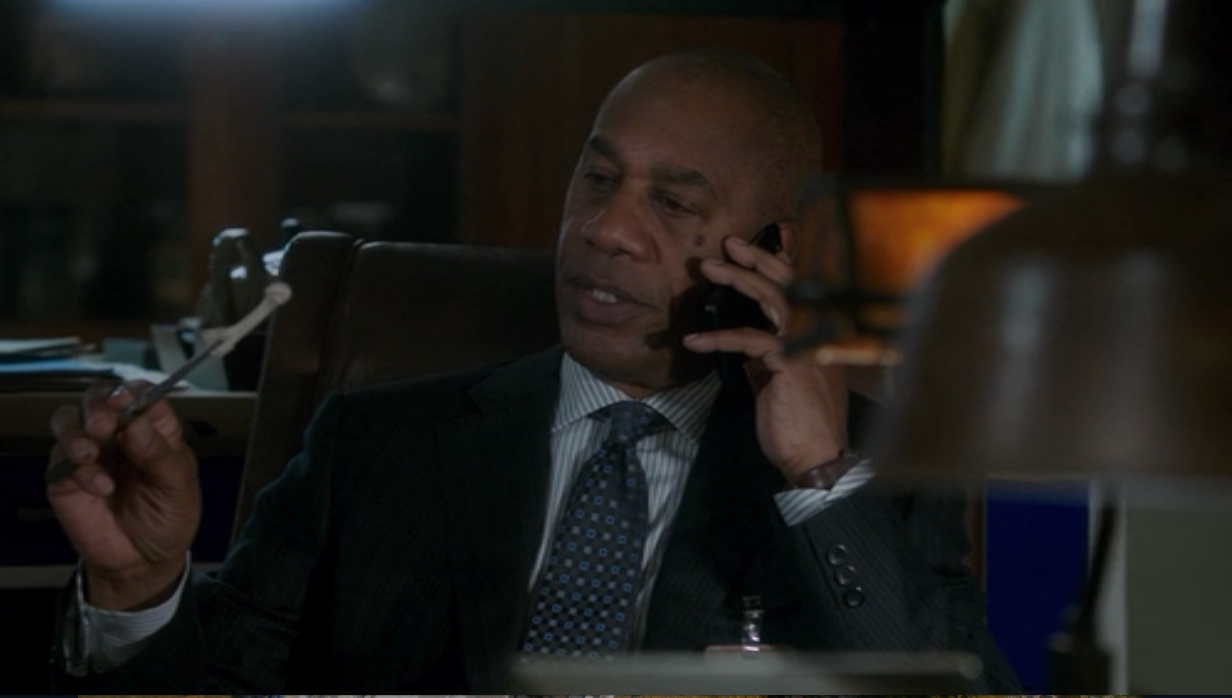
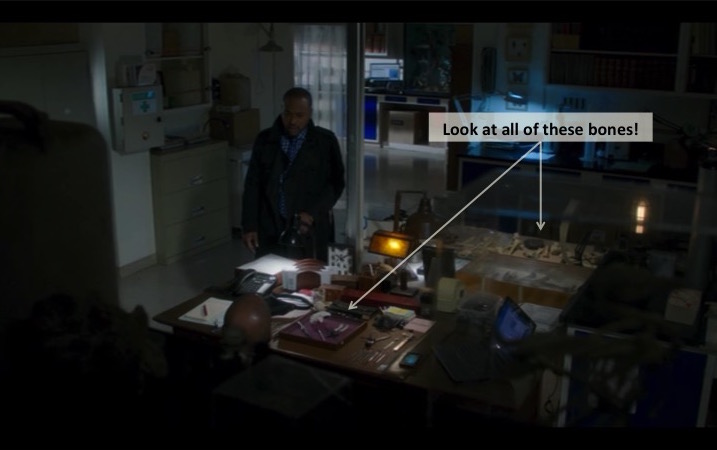
In this particular episode we witness a confrontation between Rowan and Harrison about politics/Olivia Pope/recent unspeakable behavior etc., etc. However, I wasn’t interested in the what of the conversation as much as I was interested in the where. The argument took place in Rowan’s office, and the scenery immediately piqued my interest. Princeton-educated Rowan is nominally some sort of “antiquities curator” at the Smithsonian, a cover for his true calling of nefarious black-ops intelligence mastermind. And in this episode, we finally see him….curating antiquities.

“Hmmm…Oh nothing, just hanging out and picking up this metatarsal with tweezers, you know, the usual”

JUST KIDDING. His office is actually chock full of bones:

Rowan's Office

The scene later cut to a blurry close-up of some of the elements on that back table, and it seems like his work space is littered with a mixture of human and faunal remains. I took a shot at grainy identification of some of these below:

I may be pretty far off base on some of these, they're hard to make out.

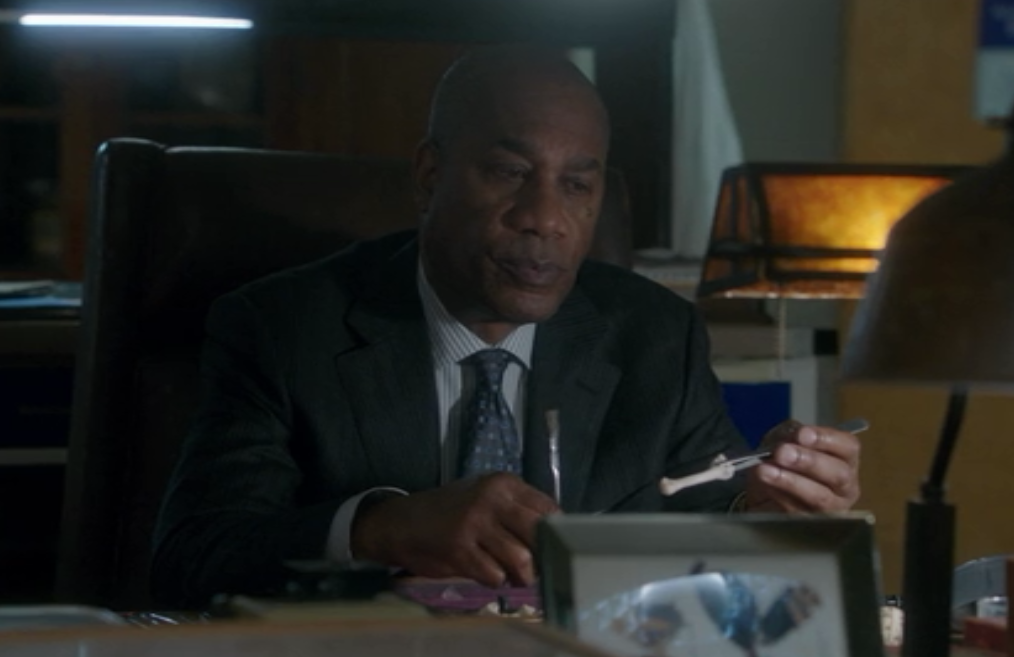
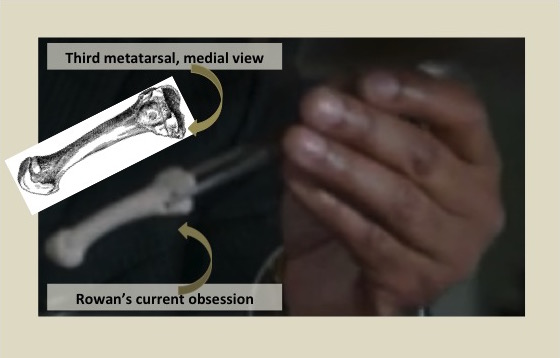
However, throughought the course of the scene, Rowan only has eyes for one bone, a small element that’s apparently so delicate that it has to be handled with tweezers (Note: This is not common osteological practice). He first examined the bone several minutes before this scene while making an important phone call, and then picked it up again during his confrontation with Harrison.

“Harrison, can’t you see I’m trying to examine this metatarsal using these tweezers? I don’t have time to talk to you!”

Given the shape of the bone I’d identify it as a metatarsal, one of the five bones that comprise the anterior sole of the foot, articulating just posterior to the toes. Based on its chunky proximal end, it’s probably an MT3 or MT4.

Scandal_3x19_3
This provokes so many questions. What kind of a fake curator IS Rowan? Is he a paleoanthropologist? A skeletal biologist focusing on the morphology of the human foot? A forensics specialist intent on determining best practices for teaching non-specialists how to differentiate faunal and human bone? Where did he get his osteological training? What is he looking for when examining that MT3/4? Why is his office home to a scattered and clearly non-comparative assortment of human and faunal remains?

rowan
Yes Rowan, I did have one final question –why are you using metal tweezers to pick up a bone!? You’re the head of a covert intelligence operation, surely you’re smart enough to know that metal instruments can damage bones and leave striations that can be mistaken for cutmarks during analysis! I mean honestly.

Image Credits: Scandal header found here. Wine and popcorn found here. Angry Rowan found here. Original third metatarsal drawing found here.  Rowan gif found here. Other photos are screenshots taken from Scandal 3×19.

Posted in Osteology, Pop Osteology | Tagged , , , , , | 1 Comment

Caries

One of the little known benefits of studying ancient human teeth is that during my weeks or months of analyzing skeletal remains, I suddenly become EXTREMELY CONCERNED about my own dental health. Brushing twice daily, flossing, gargling with mouth wash, you name it – for the entire duration of data collection, I am a dentist’s dream. Once I’m out of the field these tactics drop off precipitously, and my abiding love of Coke Zero, or anything containing sugar quickly works to balance the scales.

However, one of the reasons I’m so assiduous about my dental health in the field is that many ancient teeth show evidence of pathology related to diet and lack of access to dental care. In particular, I tend to grow concerned about my fondness for saccharine foods when I see things like this:

Caries_T2.120.01-60_Distal

Distal view of loose teeth. Caries circled in red.

Colloquially known as “cavities”, dental caries represent areas of tooth demineralization that result from the fermentation of sugars by acidogenic bacteria that grow on dental plaque (Goodman and Martin 2002; Roberts and Manchester 2005). Teeth vary in their susceptibility to caries, with anterior teeth like incisors and canines less likely to be affected. Posterior teeth like molars are more cavity-prone (Buikstra and Ubelaker 1994). Caries are also more likely to be found on occlusal surfaces with complex topography, or in the spaces between neighboring teeth, where food can become trapped and difficult to dislodge. They can also occur on tooth roots if the root is exposed to cariogenic bacteria due to periodontal disease (Ortner 2003). Caries can be differentiated from taphonomic damage because the holes are smooth-walled and rounded, almost as if an insect had bored into the tooth. In contrast, post-mortem damage tends to be sharp-edged and fractured.

The prevalence of caries has been shown to significantly increase with the global transition to agriculture, likely due to the increased dependency on sugar-rich domesticated crops (Cohen and Armelagos 1984).

Or in my case, due to the increased dependency on Poptarts brought about by the significant environmental stressor of dissertating. Which reminds me, I should probably go to the dentist soon.

Note: For a great article on how the Romans handled caries, head over to Forbes and check out Dr. Kristina Killgrove’s piece “Roman Forum Yields Stash of Teeth Extracted by Ancient Dentist

Image Credits: All images taken at the Museum of Jaén in Summer 2014.

References
Buikstra, Jane and Doulgas Ubelaker (eds) (1994) Standards for Data Collection from Human Skeletal Remains. Fayetteville: Arkansas Archaeological Survey Research Series No. 44.

Cohen, M.N., and George J. Armelagos (1984)Paleopathology at the Origins of Agriculture. Academic Press, New York.

ResearchBlogging.orgGoodman, Alan H., George J. Armelagos, and Jerome C. Rose (1980). Enamel Hypoplasias as Indicators of Stress in Three Prehistoric Populations from the Lower Illinois River Valley Human Biology, 52 (3), 515-528

Ortner, Donald J. (2003) Identification of Pathological Conditions in Human Skeletal Remains. Academic Press: San Diego.

Posted in Bioarchaeology Vocab, Human Teeth | Tagged , , , , , | 1 Comment

NSF Funding Needs Your Support!

I was describing the nature of my blog to someone recently and glossed its contents as consisting essentially of “Amusing pictures of animals. And some osteology.” However, in sharp contrast to my usual tongue-in-cheek self deprecation, this is one of the few more serious posts I’ve written. In the past week and a half I’ve received a deluge of emails from the Society for American Archaeology, the American Association of Physical Anthropologists, and the Director of the Museum of Anthropological Archaeology here at the University of Michigan, all calling attention to the issue of a threat to National Science Foundation funding. The House of Representatives recently passed a bill that proposes a 45% cut to social, behavioral and economic NSF funding, that passed by a close vote of 217-205. The bill will soon move to the Senate, where members of the  Senate Commerce, Science and Transportation Committee (CST) will begin working on a Senate version. You can read more about the nuts and bolts of the funding cut at Inside Higher Ed.

National Science Foundation funding drives anthropological research in the United States. It supports projects that uncover what it means to be human, from understanding the morphology and behavior of our earliest hominin ancestors, to unravelling the origins of agriculture, and unpacking the complex relationship between human genes and the environment. Without NSF support I could not have conducted my dissertation research, which examines how mortuary practices in early complex societies shape and were shaped by agricultural intensification, population aggregation and political centralization – circumstances that still have a significant impact on human societies today. If you’re interested, you can read more about my NSF-funded research here.

So if you’re an American reader of this blog who values learning about the human past, and you believe that fields like Archaeology and Biological Anthropology are worthy of support, please take a moment to read the information below and consider emailing your senator. If you make it all the way to the end, there MAY even be an amusing picture of an animal.

****************************************
Originally distributed by the Society for American Archaeology:

Last Wednesday, in spite of strong opposition from nearly every scientific organization (including the SAA) and research university in the country, the House passed a National Science Foundation reauthorization bill (H.R. 1806) that would make a drastic 45% cut to the NSF’s research funding for the social sciences.  The legislation was adopted by a vote of 217-205.

Now the bill goes to the Senate, which we’ve been told wants to take a better, more traditional approach to funding the NSF–one that lets scientists decide where best to allocate research dollars, not politicians.  We believe this is the way to go, but we need your help to make sure that the members of the Senate Commerce, Science and Transportation Committee (CST), which will begin working on its own NSF reauthorization bill soon, hear from you.  We have included at the end of this message the text of a basic letter that can be used to email or phone your senator, if he or she serves on that panel.  If one or both of your senators are on the CST (listed below), please take the time to contact them and register your opinion on this crucial matter.

Finally, even if your senators do not sit on the Commerce, Science, and Transportation Committee, please consider using the second basic letter included below to contact them and urge them to talk with their CST colleagues.

Republican Members

Democratic Members

If your senator is on the Senate Commerce, Science and Transportation Committee:

Dear Senator [NAME],

I am one of your constituents, living in [CITY]. I am writing to you because you sit on the Senate Commerce, Science and Transportation Committee, to urge you to assure that the National Science Foundation receives its full funding this year, and that the Committee takes its traditional approach to funding NSF: letting its scientists decide how best to allocate research dollars.

The House has passed the COMPETES Act (H.R. 1806), which includes a targeted, 45% budget cut to the Directorate of Social, Behavioral, and Economic Sciences. I believe this is not only a dangerous break with congressional relations with NSF but also not in the national interest. SBE programs foster a better understanding of how the brain works, how to deliver food, water, and energy to people, how people in the past coped with climate change, and how cultural diversity interacts with today’s pressing issues. We cannot afford as a nation to play politics with this kind of research. Thank you for keeping all of NSF well-funded.

If your Senator is not on the Senate Commerce, Science and Transportation Committee:

Dear Senator [NAME],

I am one of your constituents, living in [CITY]. I am writing to you to urge you to talk with your colleagues on the Senate Commerce, Science and Transportation Committee, to ask them to assure that the National Science Foundation receives its full funding this year, and that the Committee takes its traditional approach to funding NSF: letting its head scientists decide how best to allocate research dollars.

The House has passed the COMPETES Act (H.R. 1806), which includes a targeted, 45% budget cut to the Directorate of Social, Behavioral, and Economic Sciences. I believe this is not only a dangerous break with congressional relations with NSF but also not in the national interest. SBE programs foster a better understanding of how the brain works, how to deliver food, water, and energy to people, how people in the past coped with climate change, and how cultural diversity interacts with today’s pressing issues. We cannot afford as a nation to play politics with this kind of research. Thank you for encouraging your colleagues to keep all of NSF well-funded.

As promised.

As promised.

Image Credits: NSF logo found here. Original goat standing on tortoise found here.

Posted in Anthropology, Archaeology, Biological Anthropology | Tagged , , , , , | 1 Comment