Top Ten Christmas Gifts for Osteologists

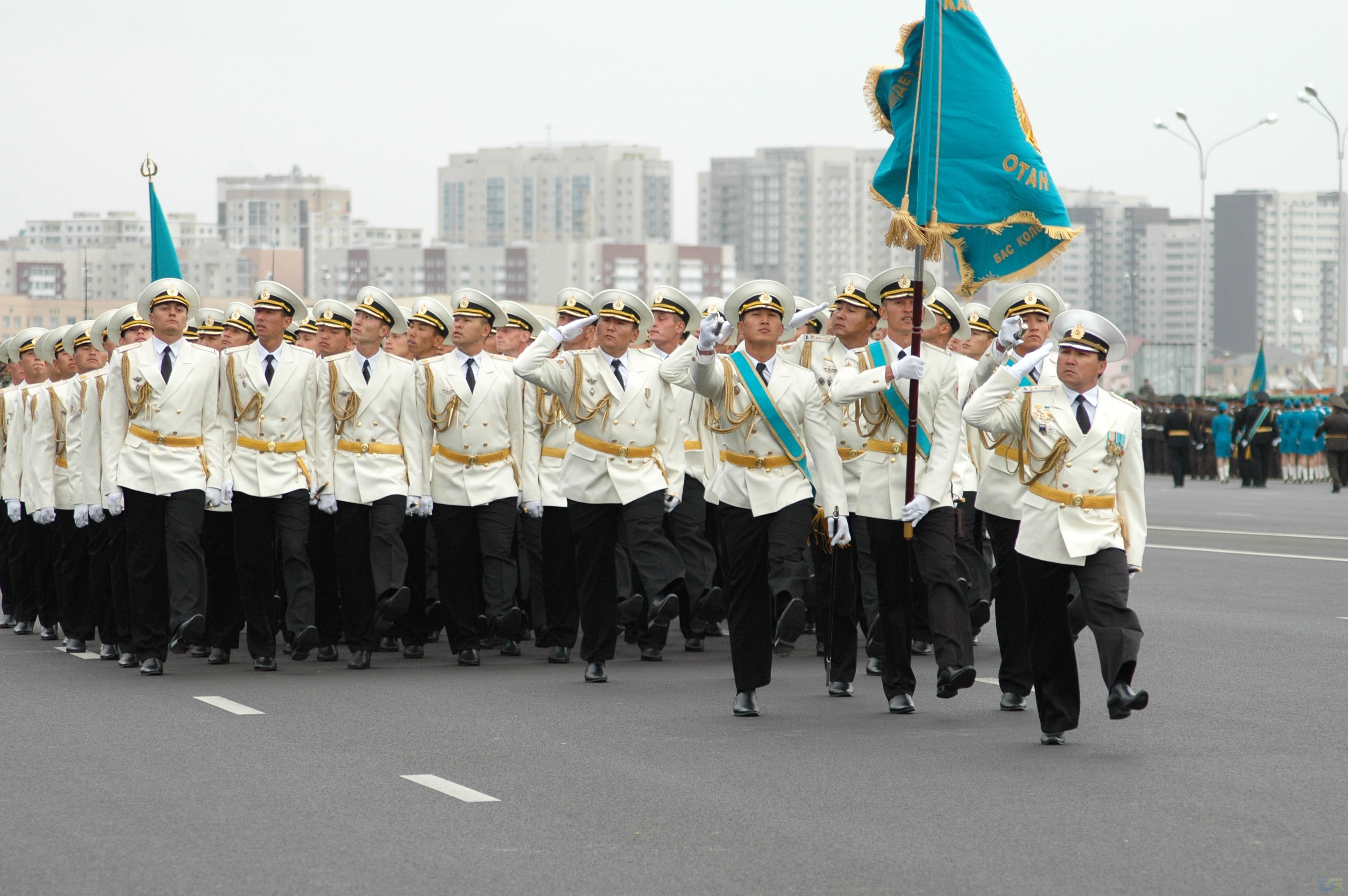
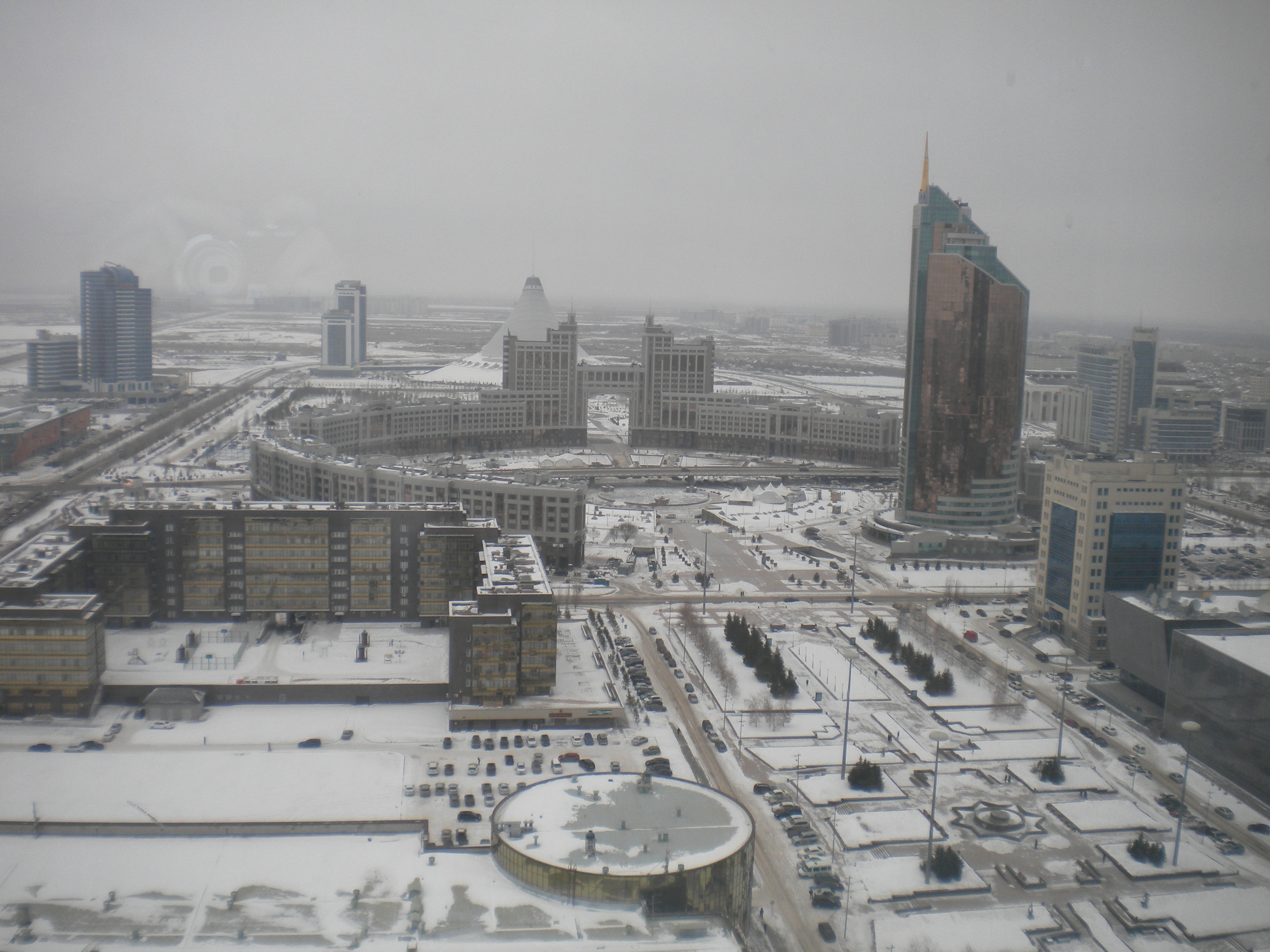
It’s mid-December, and we’re fast approaching that magical time of year when we’re tasked with finding the perfect gifts for friends and loved ones: Kazakhstan Independence Day.

Kazakhstan Independence DayNo, wait, wrong country.

Seeing as Christmas is only a week away, I figured I’d provide some guidance for anyone searching out the perfect gift to surprise the osteologist in their life. Without further ado, ten resplendent items that are guaranteed to delight anyone who spends most of their year sifting through fragments of human bone.

1) Bone Clones Magnetic Hand or Foot
Some of my bioarchaeology comrades who have been lab directors at the Kampsville
Bioarchaeology and Human Osteology fieldschool got a pair of these for teaching a year or two back. They tell me that (a) the magnetic hands and feet are great fun to play with, and (b) provide a fantastic way to learn the precise articulations for all of the facets on the carpals and tarsals.
Link: Can be purchased at Bone Clones, here.
Price: $209 for a single hand or foot
Bone Clones Magnetic Hand
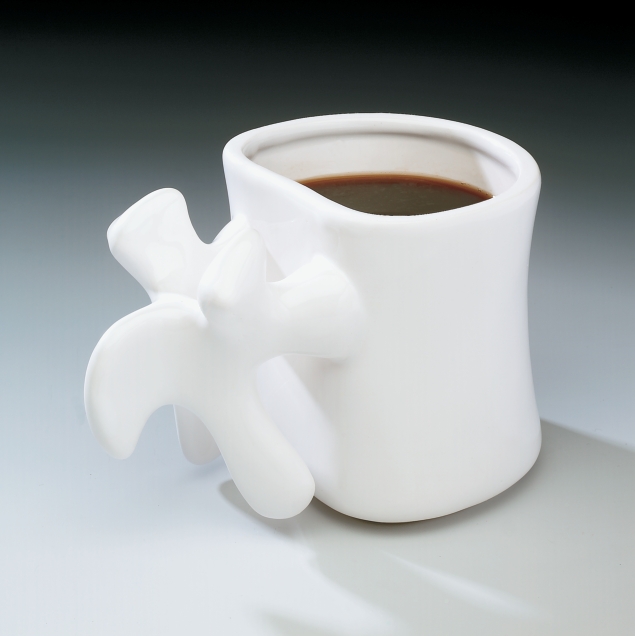
2) Lumbar Vertebra Mug
Most osteologists, nay, most academics, are fueled by some form of caffeine. To that end, why not get your bone-obsessed friend an appropriate receptacle for their morning libations?
Link: Can be purchased through Wolters Kluwer Health, here.
Price: $11.95

Lumbar Vertebra Mug
Netter Coloring Book3) Netter Anatomy Flashcards and Coloring Books
A must-have for any unfortunate soul saddled with the burden of a Gross Anatomy course. The flashcards are particularly useful as they ensure that you won’t have to lug the full Netter manual around with you all the time. The coloring books are also great – I recall scoffing at the idea when I took anatomy, and then being forced to draw insanely complicated and sloppy outlines of the brachial plexus, or whatever it was we were learning that week, before coloring in the various segments of my own questionable sketch. If you want to be a particularly impressive gift-giver, buy a set of colored pencils and a pencil case to go along with these.
Link: Both can be found on Amazon – the coloring book is here, and the flashcards are here.
Price: $17.68 for the coloring book, $15.88 for a used 3rd edition of the flashcards (I bought mine used and they were fine).
Netter Flashcards4) Skeleton Typogram Print
Aaron Kuehn has crafted a badass typogram of the human skeleton, complete with appropriate nomenclature. One of my labmates loved this so much that she printed out a copy and taped it to the wall beside her desk. To class things up a bit, I’d recommend buying an actual print from the talented artist and getting it framed.
Link: Can be purchased through Aaron Kuehn’s website, here.
Price: $50 for the official print.

Aaron Kuehn's Skeleton Typogram Print
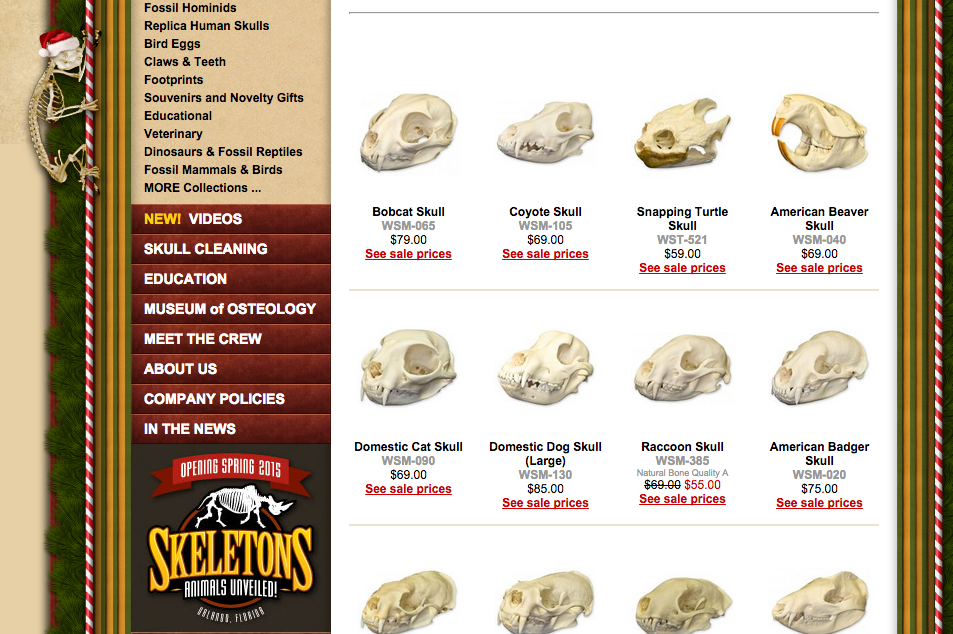
5) Real Animal Skull

Most osteologists enjoy a slightly morbid tinge to their home decor. To that end, assuming you don’t want to find some roadkill and macerate it yourself, I would suggest perusing the selection at Skulls Unlimited. The company has a wide range of animal skulls available, so you can choose whichever animal you feel most suits your friend or loved one, be it an oppossum, pine marten, or straw-colored fruit bat. They have a series of holiday deals going on right now, many of which are in the $30-40 range, so I would recommend taking a look if you’re strapped for gift ideas.
Link: Skulls Unlimited Holiday Specials, here.
Price: Varies by species.
Skulls Unlimited


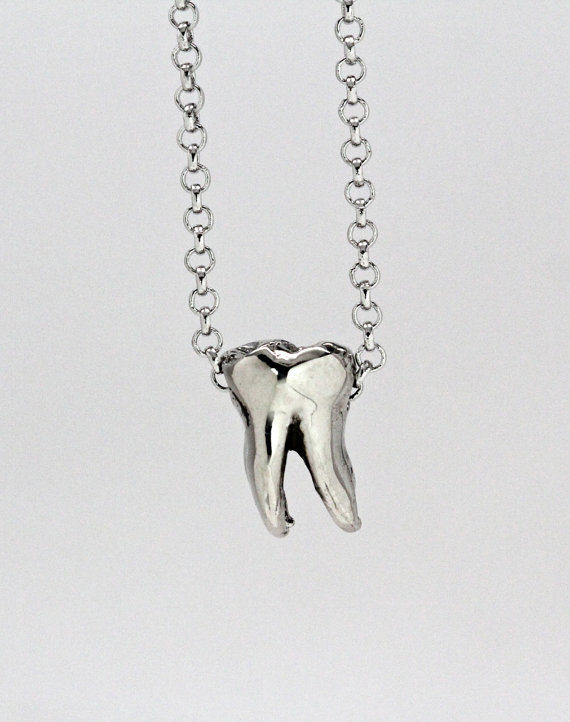
6) Molar Necklace
This necklace was created when a fan of the jeweller’s work mailed him her actual wisdom teeth…from Australia. According to the necklace description, the resultant cast is of a lower third molar. The perfect gift for anyone who spends a lot of their time looking at teeth. Or maybe not. Maybe get them #7 instead – they’re probably sick of teeth.

Link: Can be found on Etsy, here.
Price: $40 for white bronze, $60 for the blackened version.
Wisdom Tooth Necklace
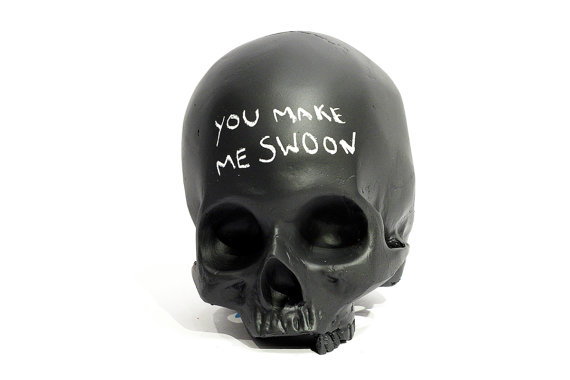
7) Chalkboard cranium
A perfect way for your resident osteonerd to leave notes at the lab – “out to lunch”, “screening for teeth”, “busy measuring femora”, etc., etc. These come in a variety of colors (including gold), and a range of species like Homo sapiens, Australopithecus aethiopicus and Gorilla gorilla, for the primatology enthusiasts out there.
Link: Can be found on Etsy at iamhome, here.
Price: $34-66 depending on species.
Chalkboard cranium

spine pen8) Bone pen or keychain
Over the years I’ve bought my labmates both this pelvis keychain and this vertebral column pen, depending on their particular research focus. A fun way to say “Hey, I do occasionally listen to all that yammering on you do about bones. Please stop talking my ear off and jot down some of your observations about the etiology of porotic hyperostosis in your diary, instead.”
Link: Pelvis keychain can be found on Amazon, here. Vertebral column pen also available on Amazon, here.
Price: $8.25 for the keychain, $6.99 for the pen.
Pelvis keychain

9) Death: A self-portrait
In the winter of 2012 I visited the Wellcome Collection in London to see their exhibition “Death: A self-portrait“. While there I snapped up this beautiful book of artwork derived from the works exhibited at the museum. The book showcases a range of different media – including woodcarvings, paintings and contemporary photographs – all underscoring the many faces of the human relationship with death. It’s equal parts morbid and beautiful.
Link: The Wellcome order link appears to be broken, but the book can be ordered on Amazon, here.
Price: $22.35
Death: A picture album

10) A portable camera tripod
While this may seem like an odd gift, every osteologist needs to photographically document specimens at some point or another. Gorillapods pack down light and are flexible even when photo settings are not. An added bonus is that they can also be used during extra-osteological travel.
Link: Gorillapod website found here.
Price:$19.95 for one of the original models.
Gorillapod

Good luck shopping! Anyone else have any other gifts that they’d recommend for osteologists? Any osteologists received particularly thoughtful or surprisingly useful gifts?

Image Credits: Photo of Kazakhstan Independence Day parade found at Central Asia Online, here. All other images taken from the associated and linked websites.

Posted in Anatomy, Bioarchaeology, Osteology | Tagged , , , | 5 Comments

Dental data collection spreadsheets

I’ve just started analyzing some of my dissertation data, an arduous process that entails correcting spreadsheet errors, deleting extraneous columns, and reconfiguring the results of pivot tables.

"What on earth does "C-Loc" mean? Why did I use that title? Dammit, past JB"

“I have no idea what that column recorded”

Which is not to say my data were poorly organized – overall I’m pleasantly surprised by the lack of massive errors thus far. Which probably means I’m due for disaster any day now.

overconfidence

However, one reason that I’ve avoided complete analytical meltdown is that I constructed my own spreadsheets based on templates passed on by more experienced bioarchaeologists. Such examples are helpful for providing a starting point for your own database organization – even if you don’t wind up using the same spreadsheet structure or collecting the same metrics, they provide templates that you can tweak and modify to suite your own needs, which is much easier from starting from scratch.

To that end,  I’m posting the spreadsheets that I used during dental data collection. I have separate documents for loose dentition (both adult and subadult),  articulated adult dentition, and articulated subadult dentition. I’ve also posted an explanatory word document that describes the type of data recorded in each column. Each spreadsheet comes with sample rows that are filled out to illustrate the kind of data recorded in each column. Photos of the elements recorded in the sample rows are included in the explanatory guide, to help you to orient to the spreadsheet organization.

Guide to Dental Data Collection Spreadsheets
1. Bone Broke Loose Dentition Spreadsheet
2. Bone Broke Adult Articulated Dentition Spreadsheet
3. Bone Broke Subadult Articulated Dentition Spreadsheet

Finally, if you’re embarking on your own bioarchaeological data collection in the near future, or if you’re simply curious about how other researchers organize their efforts, I also have two related posts that cover (1) photographing and organizing articulated dentition for analysis and (2) photographing and organizing loose dentition for analysis. If you’ve previously collected this kind of data, and in particular if you’ve had to deal with large amounts of loose and articulated dentition, I’d be extremely interested to hear what kind of data-wrangling strategies you used!


Image Credits: Joey typing found here. Overconfidence motivational poster found here. All other photos taken at the Museo de Jaén in summer 2014.

Posted in Bioarchaeology, Data Collection, Human Teeth | Tagged , , , , | 2 Comments

Osteology Cakes

I’m currently living in a part of the world where the sun rises at 9:00 am, and sets at 5:00 pm. Given that I’m at approximately 51˚N, this is not cause for apocalyptic alarm but instead reflects the brevity of winter days at high latitudes. I’ve only ever been this far north in undergrad, when I spent a month in northern Finland for a fieldschool run by McGill archaeology.  We were only two degrees below the Arctic Circle, but I loved it…because we visited Oulu in the early summer. I fondly recall the novelty of strolling through wooded campus paths at 10 o’clock at night, with dusk just beginning to descend as the last rays of light struck the abundant birch leaves in a final blaze of glory. Winter, unfortunately, represents the opposite side of that coin in the far north:

6pm...At least New Year's decorations are up?

6pm…At least New Year’s decorations are up?

Instead of eternal sunshine, five o’clock now heralds the daily descent into stygian blackness. While the novelty of feeling like I’ve been posted to a polar research station has yet to wear off (though this feeling also provokes occasional subconscious tremors of concern, for obvious reasons), the limited daylight is beginning to wreak havoc with my circadian rhythms. I lever myself out of bed at late hours only to collapse despondently on the couch, and start to grow weary at around 7 o’clock at night, despite my limited movement and/or productivity during the days.

Kindred spirit

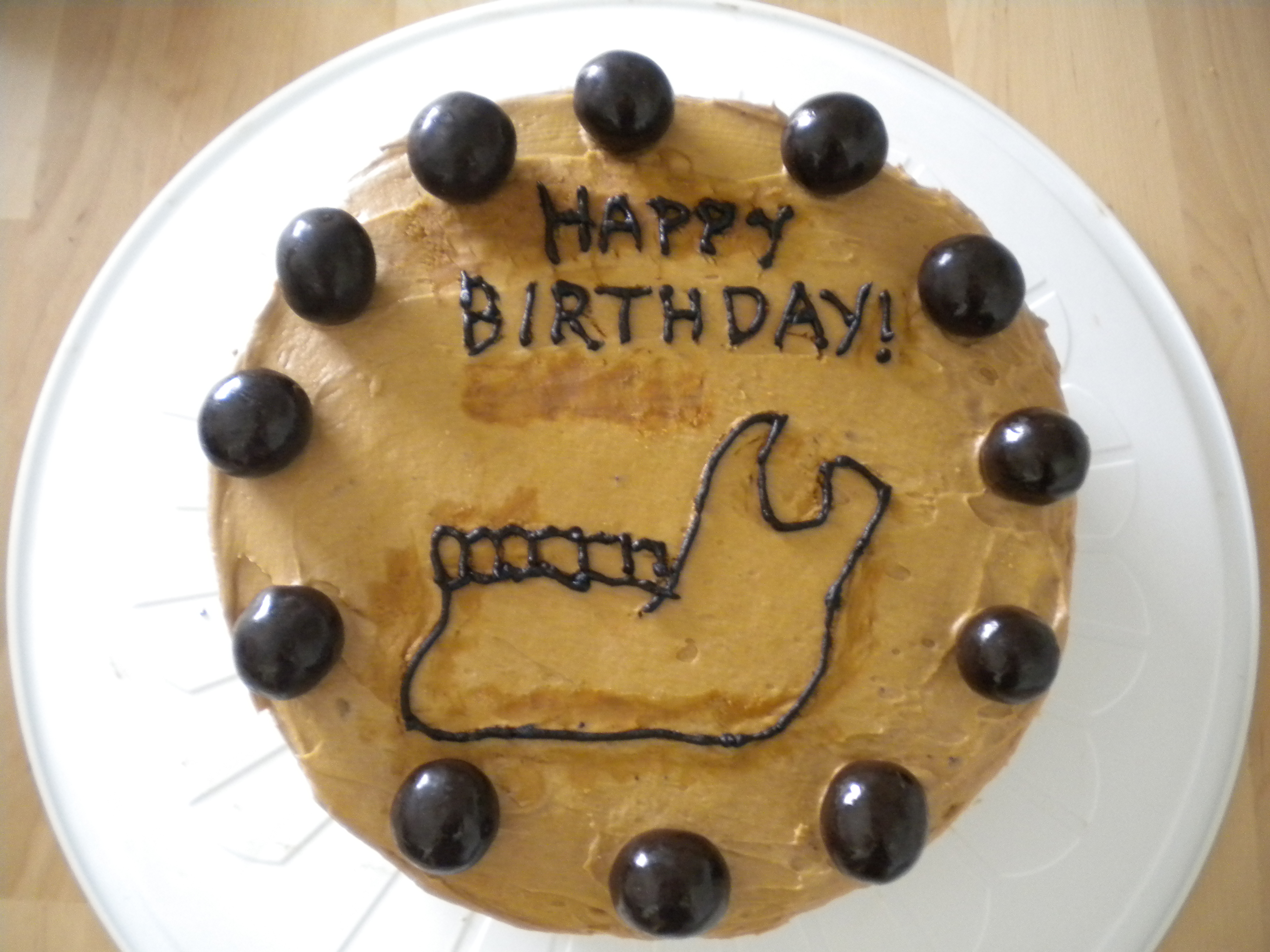
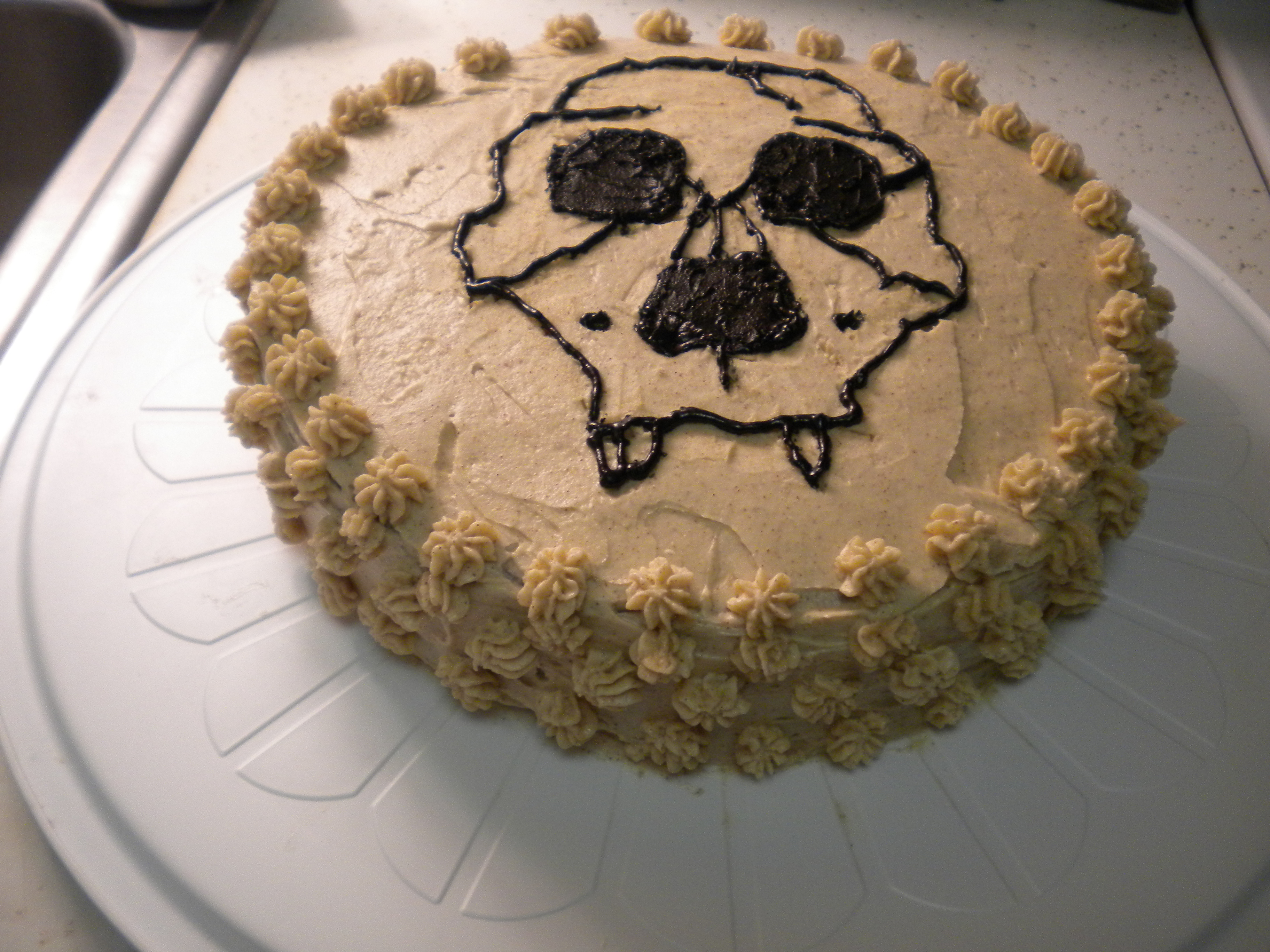
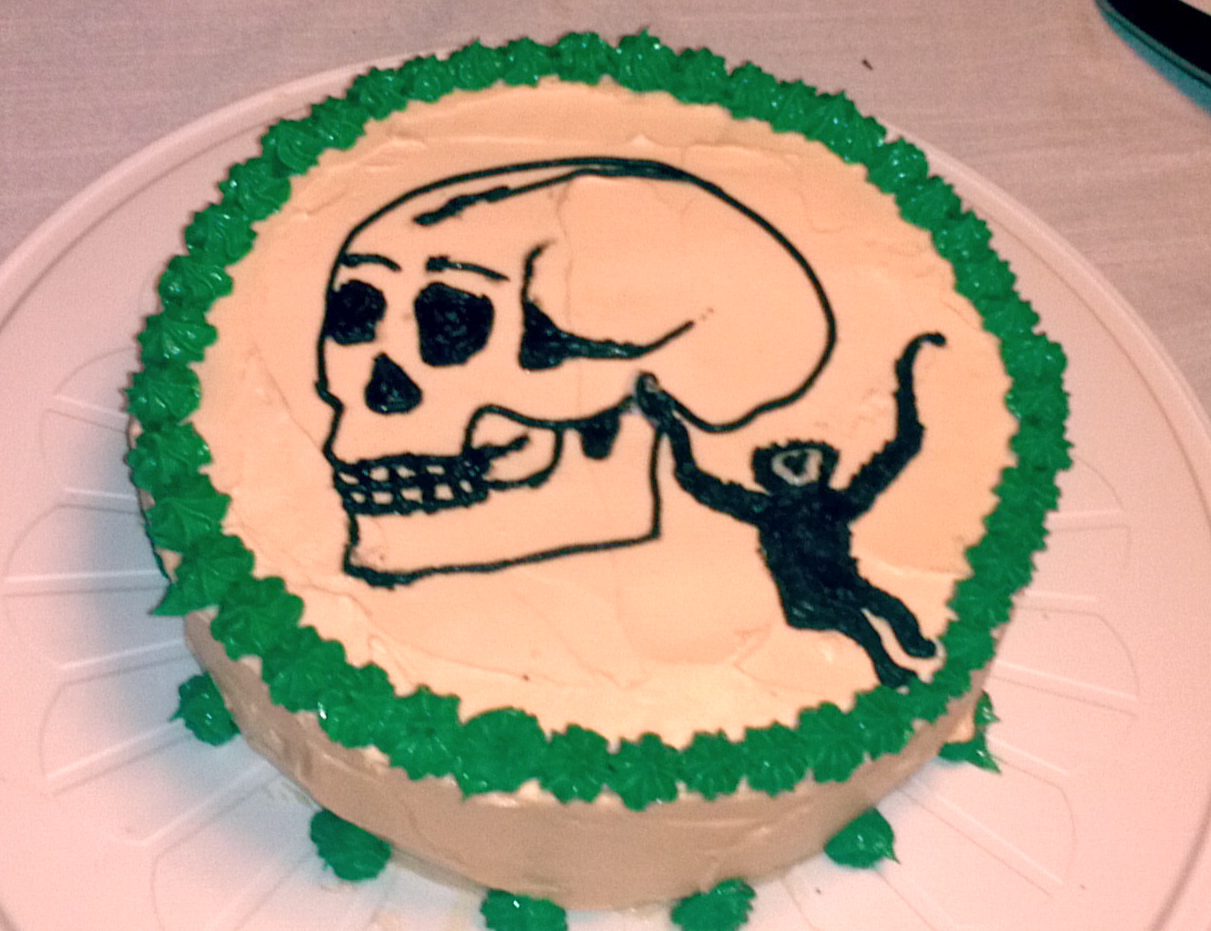
Because early December marks the crunch period for most academics I know, with an endless succession of grading, exams, paper writing and quals, I have no doubt a lot of you are in the same boat. One of the best ways I know of to deal with mid-winter blues is to stress-bake, an endeavour that occurs when you channel all of your anxiety about deadlines and overfull inboxes into kitchen productivity. However, I recognize that some people don’t find culinary pursuits quite so relaxing, but are still fans of awesome food. Keeping all of this, and the osteology theme of the blog, in mind I’m sharing my collection of osteology-themed cakes below. I feel like we’ve hit the point in the season where everyone needs some frivolous outlets for decompression.

May your weekend be filled with sugar and daylight.

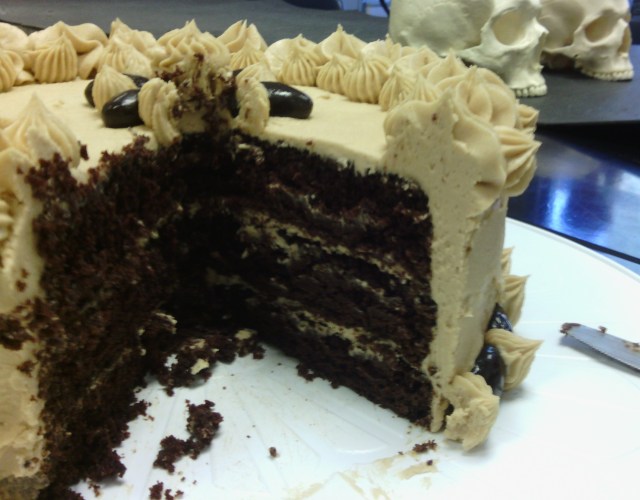
This is a stout beer and chocolate cake with coffee frosting (and dark chocolate malt balls) that I made for my graduate colleague Zachary Cofran – his dissertation was on mandibular growth and development in the robust australopithecines. Hence the jaw. As an osteologist, I am duly apalled by the relative proportions of the condylar and coronoid processes. I hang my head in shame. At least the cake was delicious.

This was a pumpkin brown butter concoction with cinnamon buttercream. I made this for a slew of reasons – John Hawks (of eponymous weblog fame) was visiting the lab, we’d just gotten some new fossil casts, and I’d purchased an icing pen that I was dying to use. Bonus points if you can identify the fossil depicted!


I have forgotten what kind of cake this was – possibly chocolate and peanut butter, judging by the hue of the frosting. I do remember that I baked it, and it was decorated by the lovely and talented Dana Begun – sadly I cannot take responsibility for the genius idea to have a gibbon brachiating from a condylar process. Biological anthropology for the win.


This offering didn’t have anything osteological decorating it, per se, but I find it extremely amusing that I inadvertently included some crania in my attempt to photographically document the stratigraphy of the three-layer monstrosity.

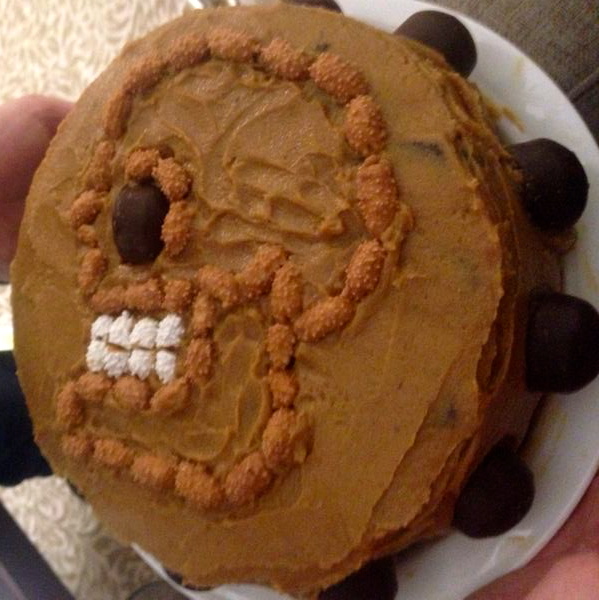
This most recent submission is a repeat of the Guinness and coffee cake from the first photograph. Trying to bake an American-style cake in Kazakhstan (where powdered sugar is typically sold in 30gram packets, all cake pans are designed with imprinted flower motifs, and many apartments are equipped with large toaster ovens rather than actual ovens), is something of an uphill battle. I did what I could with sugar-coated peanuts and tenacity. I think it has kind of a ‘sugar skull designed by a grade school child’ effect, that I hope comes off as charming rather than ill-conceived. We’ll call it ‘whimsical’ and leave it at that.

Image Credits: “What Have I Become?” cat was originally found here.

Posted in Grad School, Osteology | Tagged , , , , , , | 3 Comments

“There’s something the dead are keeping back”: Why I study bioarchaeology

Note: This is a longform essay that I entered in Brown’s Archaeology for the People competition back in September. On the one hand, I did not win, which means I am, sadly, neither rich nor famous. On the other hand, I now get to share it on the blog. All’s well that ends well. 

I remember the first time I touched a child’s bones. Crouched on the side of a sun-drenched Portuguese hill, I knelt in front of a slope of sediment from which human remains sprouted like calcified weeds. The site of Bolores is just outside of Torres Vedras, a small, sleepy town nestled in the gentle hills of the Portuguese Centro, some 40 kilometers north of Lisbon. Between four and five thousand years ago, people gravitated to this small rock shelter perched halfway up a hill, carving out the soft rock of the overhang to bury their dead in a communal grave. Incredibly, the site was used for over a millennium, with generation after generation interring a few select individuals in the gentle curve of the hillside that had been gradually chiseled out of the limestone overhang. Centuries of use led many of the skeletons to become commingled; as space was dug out for each new interment, old bones became dislodged, overturned and upended, mixed with the bones of other people. Each burial was covered with sediment, and then the process was repeated, over tens and even hundreds of years.

The site was discovered when a local farmer noticed bones eroding out of the ridgeline, and so we were carefully undoing one thousand years worth of ritual, lifting out a handful of earth for each handful scattered in the past, levering up the limestone slabs that had been used as platforms to support the dead, and removing, bone by bone, every individual who had been carefully laid to rest in the rock shelter. We had been digging for a few weeks, and I was learning how to navigate a site peppered with extremely fragmentary human remains: walk barefoot, dig slowly, and keep your eyes peeled for teeth.

Most archaeologists could easily equip themselves with the leavings from a typical construction site – large shovels, pick-axes, trowels, rebar, and flagging tape – but the fragile nature of the human remains preserved at Bolores required a different approach. We worked with a tool-kit pilfered from a variety of other professions; our packs were filled with the cheap bamboo skewers favored by shish-taouk vendors, exquisite long-handled coffee spoons more appropriate to Portuguese cafés, finely-tipped artists’ paint-brushes, and brightly colored thumb tacks normally used to hold up elementary school posters. Excavating a prehistoric and commingled burial is a delicate affair, and so every day I would hunker down in front of a space barely 20 centimeters across, dislodging recalcitrant clumps of dried sediment with the skewer, lifting tiny spoonfuls of dirt out of crevices, lightly brushing away sand to reveal the contours of smooth patches of bone, and marking the location of finds with the thumb tacks.

On this particular afternoon I was hunched over a jumble of broken bones, a cornucopia of arm bone heads, vertebral bodies, and fractured thighbones. While gently brushing around a robust first metacarpal – the large bone just underneath the base of your thumb – I uncovered four tiny shafts. I called our resident bioarchaeologist, Anna, over for a look. “Are these animal? They’re so small that they can’t be human, right?” She crouched down for a minute with her brush, nose only inches away from the bones. “No, no, they’re human. Subadult phalanges. Maybe 2-4 years, based on the size?” She headed back to her unit and I rocked slowly back onto my heels. Even though I had worked on many other archaeological projects, this felt different. The remnants of the child’s hand were nestled up against the adult thumb, as if arranged to give them protection or comfort. It was impossible to tell whether the positioning was deliberate or merely the result of centuries of sedimentary admixture, but the potential purposefulness of the arrangement struck me. Thousands of years ago someone had lost a young child, carried them up to this isolated, wind-swept ridge kilometers away from the nearest settlement, and laid them to rest in the company of their ancestors.

As an archaeologist, it becomes easy to disassociate oneself from the past, to grow inured to the incessant, intriguing pressure of generations of ancient lives. The material traces of prehistoric existence metamorphose into data points on a spreadsheet, converting hours of artisanal effort, decades of use-wear, and flashes of personality into banal column entries with a single click of a mouse. Staring at the child’s fingers, stained reddish-brown by the surrounding earth, this degree of disassociation suddenly seemed impossible. For the first time I was viscerally aware of just how close I was to the past, confronted with the knowledge that these hands had been part of a person. The fragmentary cranial bones I was having so much trouble extracting, the femoral head that was slowly disintegrating and impossible to preserve – these were no longer simply objects, tiresome tasks to be checked off a late afternoon excavation to-do list. Everything in my immediate field of vision had once been part of a person, and had been deliberately interred in this cave because of other people, responding, emotionally, physically and socially, to their death.

The beginnings of bioarchaeology                                                                                          I am not alone in my obsession with bioarchaeology’s unique ability to put you in immediate, tangible contact with ancient people. Bioarchaeology, the study of human remains from archaeological sites, is a speciality that has grown rapidly within archaeology over the past fifty years. At the turn of the 19th century, when many practitioners of the discipline resembled the mustachioed protagonists of H. Rider Haggard novels, human remains were widely considered to be an inconvenience. Skeletons proved an impediment to accessing the elaborately decorated ceramics, golden vessels, obsidian blades, and other artifacts that excavators so eagerly sought after. As a result, human remains were treated with about as much dignity as the plough zone, the layer of modern agricultural activity archaeologists must remove before excavating a site.

Stories abound of early teams tunneling through burials, destroying carefully arranged ritual interments for the sole purpose of retrieving exotic or elaborate grave goods – a practice we now recognize as looting. Given this professional history, it is little wonder that NAGPRA, the Native American Grave and Repatriation Act, was put into place in 1990. This legislation stipulates that archaeologists in North America are legally obligated to return any excavated “cultural items” – a category which includes human remains – that are identified with or related to descendants living in modern Native American communities. Due in no small part to archaeology’s abysmal history of disrespectful treatment of indigenous human skeletons, early calls for repatriation of Native American remains poured in to national and local museums and state archaeologists. Thanks to the efforts of both active indigenous communities and a new generation of archaeologists supportive of NAGPRA and Native American rights, thousands of human remains that were carelessly excavated in the past century have since been reburied.

It was not until the second half of the 20th century that the traditional idea of “human bone as refuse” began to change. During the mid-1900s, pioneering skeletal biology research started to provide new ways to garner information from human remains.       Anatomists were beginning to realize the utility of curating humans for study, amassing large-scale, comparative collections of individuals with known life-histories in order to chart the effects of age, illness and trauma on the human skeleton. Robert J. Terry, a professor of Anatomy at Washington University in St. Louis, was an early pioneer in this movement. He focused on skeletons collected from the university medical school’s anatomy cadavers, giving abandoned bodies that had become “property of the state” greater public utility than unceremonious cremation. Terry’s project quickly grew in scientific scope and professional scale. Researchers diligently documented biographical information like sex, age, and cause of death, collecting data on a broad cross-section of contemporary society. By the 1950s, the project began to comply with new legislation that mandated familial legal consent for cadaver donation. In 1967, the pioneering collection was moved to its new home in the Smithsonian Museum of Natural History, where it serves to this day as an unmatched repository for skeletal research.

Terry was not alone in understanding the utility of such large-scale skeletal samples. In the first three decades of the twentieth century, the anatomist T.Wingate Todd added thousands of human skeletons to the prodigious Hamann-Todd Collection, now housed at the Cleveland Museum of Natural History. Such collections were not mere cabinets of curiosities. Todd is famous within osteology, the branch of science devoted to the study of bones, for developing methods for estimating the age of an individual using the hip bone. Todd focused on the pubic symphyseal face of the pelvis, the region ten centimeters below the navel where the arching struts at the front of the hips interlock. He examined this area on hundreds of different skeletons, comparing individuals of different sexes, ancestries, and ages to map out age-related changes in the appearance of the bone’s surface. Other researchers drew on growing anatomical collections to refine the methods developed in Todd’s foundational studies, working with diverse skeletal samples collected from the Korean war and Los Angeles morgues, in order to study these same changes in different segments of the population. Over the course of fifty years, anatomists and physical anthropologists made groundbreaking strides in developing standards for accurate age estimation.

A fully fleshed prehistory                                                                                                           In many ways, assessing the age of a human skeleton is akin to the process of estimating the age of a living person. When meeting a new acquaintance, we use a number of small cues to make an educated guess as to how old they are, subconsciously observing the number and depth of their wrinkles, the thickness of their hair, and the straightness of their spine. The visual cues that osteologists use to estimate the age of a skeleton are more arcane, but work in a similar fashion. Consider the auricular surface, the area where the back of the hip connects with the sacrum. If you focus on this anatomical region, the gentle billows on the surface of the bone gradually degrade into an irregular roughened expanse as an individual ages. The transformation from a smoothly undulating surface to a pitted swathe of pockmarked bone is as distinct and immediately recognizable to a bioarchaeologist as the difference between the dewy features of an adolescent girl and the wizened countenance of her grandmother standing beside her.

Evaluating biological sex relies upon similar kinds of pattern-recognition. Nine times out of ten, if you are given five seconds to decide whether a photograph of a stranger is male or female, you’ll make the correct choice. Bioarchaeologists use some of the same guidelines – the prominence of the chin, the robusticity of neck muscle attachments, the smoothness of the brow – to produce a qualitative assessment of the sex of an individual. However, just as physical appearance can be misleading in living humans – as in the case of more androgynous individuals like the model Andrej Pejic who famously walks as both a man and a woman – features of the bony cranium can also be deceptive. Strong-jawed, robust-browed females and small-chinned, slender-necked males are found in all populations, which is one reason that assessments of sex and age are explicitly defined as estimates rather than identifications. We make occasional mistakes in our everyday assignations of individual biology – your new co-worker, who you could have sworn was over forty, is only thirty-one; the petite, long-haired child who scampered past you at the park is male rather than female – so it is unsurprising that osteologists can be similarly misled by subtle changes in the architecture of the skeleton. For this reason, bioarchaeologists prefer to use the pelvis to assess sex, because the evolutionary pressures of childbirth have placed stronger constraints on formal differences between male and female structures in this region. Still, there are no absolutes, as wide-hipped males and slender-hipped females do make up part of the inherent variability of human populations.

While skeletons thus occasionally provide ambiguous clues as to an individual’s sex, one area in which human bone provides an extremely faithful record of the past is when it comes to health and activity. As is so famously encapsulated in Wolff’s law (the osteological equivalent of Newton’s laws of motion, or Einstein’s E=MC2), living bone adapts and adjusts to the stresses it is subjected to. As with muscles, greater use leads to stronger, more robust bones, while disuse and inactivity causes elements to wither and waste away. If a thighbone is enormous and has colossal, imposing ridges for muscle attachments, it is likely that the individual that it belongs to was extremely active during life. If, on the other hand, the bone is delicate and gracile, with relatively smooth surfaces, its owner was likely not as vigorous or active. Osteologists interested in differences in activity level and habitual patterns of movement have begun to quantify such differences. By measuring variability in size and patterning of these musculoskeletal stress markers – well-known anatomical regions where muscle tendons cleave to bone – bioarchaeologists have quantified differences in male and female daily activities in prehistoric Hudson Bay populations, charted changes in habitual subsistence tasks during the transition from foraging to farming in the Levant, and isolated the effects of the Spanish conquest on the labor patterns of indigenous south-western populations.

In addition to registering the activity of soft tissues like muscles and tendons, foundational work in paleopathology, or the study of ancient disease, demonstrated that skeletons also record some of the more painful aspects of daily life in prehistory. Starting in the 1960s, dedicated physical anthropologists like Don Ortner began to map out the precise links between specific diseases and their effects on human bone, creating reference manuals that allowed osteologists to make posthumous diagnoses of illness suffered during life. Treponemal infections like syphilis and yaws, for instance, famously decorate the cranial vault with radiating lesions called stellate scars, so named for their passing resemblance to stars. Tuberculosis weaves its insidious web in the spine, boring into vertebral bodies with destructive, gaping holes called psoas abscesses. Leprosy can voraciously attack the skeleton of the upper face, causing the bony nasal aperture to widen, while eating away at the bone of the upper jaw, forcing the bone to furiously attempt to rebuild itself in the face of this bacterial onslaught. Specific nutritional deficiencies can also be diagnosed – rickets, a demineralization disorder caused by a paucity of Vitamin C, calcium, or phosphate, is immediately apparent in the sickening curvature of the long bones of the arms and legs, elements so arched they appear to have been pulled and twisted like taffy at a fairground.

Even the most mundane daily activities take their osteological toll and leave archaeologically visible traces. Over time, the impact of every jolt, every rolled ankle, every basket lifted and grain processed, becomes inscribed in one’s bones. Bone breakage, if it occurs before death, results in the formation of a callous, a rounded protuberance of boney “band-aid” that surrounds the affected site, slowly knitting the bone back together. In other instances, particularly when fractured elements are not splinted together properly, bones heal incorrectly, coming together orthogonally in a condition called malunion. Many prehistoric populations were also affected by osteoarthritis, the bone-on-bone rubbing that occurs as older or more active individuals begin to wear out the cartilaginous padding that protects the articular surfaces of bones. Joint surfaces, like the area where your upper arm meets your shoulder, or your thigh meets your leg, become flattened and porous, covered with a highly visible gloss called eburnation that is the distinct result of bone wearing upon bone for many years. The polished sheen, surface marked by porous pinpricks and lipped by curled spicules of grasping bone, suggests that even the smallest movement in this condition would have resulted in a great deal of pain as the distal end of one element scraped over the proximal end of another. Thus, though the results of paleopathological research are often troubling, they serve to provide evidence of what daily life was like in the era before modern medicine: infectious disease, nutritional deficiencies and heavy labor loads were common problems in the ancient world, and trailblazing paleopathologists were responsible for demonstrating the extent and scope of such ailments.

During the 1970s, a dedicated group of young archaeologists began weaving these insights from anatomy and physical anthropology into archaeological practice. Estimating the age of an individual by examining the morphology of their pelvis or the closure of their cranial bones, reconstructing the demography of an ancient population by investigating dental wear, and recreating deadly trauma by analyzing the edges of fractured bone; such fantastic analytic feats were now possible. Instead of the refuse of an excavation, retrieving human skeletons now became the goal of many archaeological projects, and intensive, long-term research in varied parts of the world began to illuminate aspects of daily life that had previously been inaccessible. Large-scale projects in Western Europe, the American Midwest and North Africa opened a new door into the past. This new generation of bioarchaeologists turned ancient skeletons into individuals, rather than mere boxes of jumbled bones. They collected data on age, sex, health, diet and trauma, fleshing out a portrait of prehistory that had been previously been based largely on traces of material culture –artifacts like pottery, stone tools and architecture. By focusing on the individuals who produced and used these objects, bioarchaeologists began to bring actual people back to the forefront of our understanding of the past.

Piecing together a fragmentary past   

Pioneering studies of early skeletal material focused on samples of well-preserved, relatively complete individual burials. Unfortunately, while entire skeletons can provide faithful records of individual lives, it is rare that bodies are preserved intact unless they are relatively recent inhumations. The archetype of the diligent archaeologist carefully brushing dirt away from an intact cranium and slowly revealing the recognizable and articulated silhouette of a complete body is somewhat misleading. Unless the excavation is focused on historical remains, human bones are rarely so neatly packaged. In most prehistoric excavations, the grunt work of bioarchaeology lies in the retrieval of fragments large enough to analyze; bone preserves well, but it is by no means impervious to the onslaught of time and taphonomy (the effects of weathering, erosion, and movement on bones). In sharp contrast to the complete skeletons prepared and analyzed by Terry and Todd, the majority of archaeologically retrieved skeletal material is often dishearteningly paltry – I have heard the term “cornflakes” used to describe the infinitesimally small, weathered fragments of crania and long bones that bioarchaeologists are tasked with analyzing.

That is why teeth are particularly valuable – their incredibly dense enamel makes them hardy survivors in the archaeological record, and they can withstand taphonomic conditions that destroy much larger portions of human bones. This resistance to destruction is particularly important, as one of the first goals of a bioarchaeologist is to figure out how many people are represented at a given site. This number is referred to as the Minimum Number of Individuals, or MNI, so called because it is calculated by figuring out the lowest number of people it would take to produce the bones represented in a skeletal assemblage. For example, if an osteologist establishes that a particular burial contained five separate left thighbones, then the remains of at least five people must have been interred in the grave. However, when burials are fragmentary, commingled or partially excavated, establishing the precise number of bones and the side of the body they come from is a tricky business. The sheer weight of surrounding rock and sediment, the insidious seepage of erosive water, and the buckling and twisting of the ground’s freeze – thaw cycles over the course of millennia all work to fracture human bones into miniscule puzzle pieces. Because bioarchaeological analysis occurs after excavation, these delicate flakes of fragmentary bone must be prised out of the earth and transported to a laboratory, only further subjecting them to damage and distortion. This is why, particularly when graves are ancient, bones are fragmentary, and individuals are inextricably mixed together, human teeth are invaluable.

Unlike a thighbone or a cranium, a tooth is often able to weather the onslaught of the thousands of years of site formation processes with equanimity. The choice between analyzing thousands of fragments of postcranial bone that may refit, but may not, and the largely complete human teeth that accompany them, is an obvious one. Unfortunately, the utility of human teeth is matched only by their ability to evade archaeologists’ eyes and fingers. At Bolores, a site containing the jumbled up bones of over thirty men, women, and children, anyone who found themselves at a loss for work was cheerfully relegated to the abandoned tires that decorated the edge of the site. Perched atop the baking rubber, fieldworkers would hunker down and screen for teeth, combing through small circular sieves for bright, polished flashes of enamel. Hunting for loose dentition is a mind-numbingly tedious process. Sorting through chunks of sediment and minute fragments of bone for loose teeth is the osteological equivalent of combing through a bowl of dry rice to hunt for large grains of kosher salt. However, the analytical pay-off is worth it, for human teeth encode precious information about the age, health and diet of prehistoric individuals.

To begin, teeth tell us that ancient populations were subject to severe dental problems as a result of their diets. Before the 1980s it was widely assumed that the development of agriculture represented a quantum leap forward in human well-being, with intrepid newfound farmers providing their communities with increased food security, better living conditions, and the opportunity to settle down and focus on the arduous process of civilization building. However, early bioarchaeological investigations revealed this to be an overly simplistic portrait, one that glossed over some of the heavy costs of humanity’s increasing reliance on domesticated crops.

One deleterious effect of the transition to agriculture in many parts of the world was a rise in the frequency of caries, or cavities, the pits bored into the surface of a tooth crown by bacterial infection or decay. As people domesticated key grains like wheat and maize, they began to inadvertently consume greater and greater amounts of starchy sugar – gulping it down in fermented drinks like the sweet maize-based chicha of Peru, consuming filling, sticky porridges of domesticated seeds in the Midwest, and tearing into hearty loaves of hand-ground wheat bread in the Old World. As a result, even a cursory examination of the teeth of any early horticultural community reveals shudder-inducing examples of dental disease. Working with the skeletons of early farmers in both North America and Europe, I’ve witnessed enormous, obviously painful caries that obliterate entire tooth crowns. Cavities aren’t the worst of it. Many adult skeletons also exhibit high walls of hardened plaque that completely imprison individual teeth. In the worst cases, jaw bones can be marked by insidiously smooth-walled open channels – abscesses so caustic that the infection ate through the bone itself. In the days before dentistry, these kinds of problems were more than mere inconveniences. Broken Hill, an early human fossil dated to 200-300,000 years before present, preserves some of the earliest evidence of just how serious these sorts of dental problems could be. This Zambian specimen of Homo heidelbergensis is well known because of its extensive caries and dental abscesses, insults so severe that they may have contributed to his death.

Just as teeth can tell us when people were getting too much of a certain food, they can also tell us when people weren’t getting enough. Another global pattern in the transition from hunting and gathering to agriculture is an increase in the number of linear enamel hypoplasias. Hypoplasias are defects in the enamel surface of a tooth that result from periods of growth interruption due to illness or malnutrition. These indented lines or pits are visible to the naked eye, but are easy to miss unless you are a diligent observer. Enter any bioarchaeology laboratory and you will find at least one person holding incisors up to a strong light, scanning them with the aid of a hand-loupe, and blinking like a confused owl when you walk into the room and interrupt them. The reason that osteologists devote so much effort to poring over the surfaces of canines, hunting for even the smallest defect on the smooth enamel surface, is because hypoplasias have the ability to tell us what an individual’s early experience of life was like.

Everyone vaguely remembers the childhood experience of losing their baby teeth. Sitting at your school desk with a furrowed brow, poking your tongue against the increasingly pliable back of an incisor or canine, you likely fell into one of two groups: dreading the painful pull of the inevitable slammed door, or eager to get the interminable process over with. The reason, of course, that we loose our baby teeth is because they’re pushed aside to make room for the new permanent dentition erupting beneath them. Additionally, because permanent teeth develop during our early childhood, they provide a faithful record of any severe stress experienced during that time period. Just as you are capable of prioritizing key needs in moments of crisis, deciding to finish a project at work rather than go to the gym, for example, your body also prioritizes the functions it feels are non-negotiable in times of crisis. Maintaining brain function? Indispensible. Adding an extra layer of enamel to a developing tooth when you barely have enough calories to keep yourself alive? Your body says you can do without it.

What bioarchaeologists found when they examined the teeth of early farmers was that many of them had experienced very serious episodes of nutritional stress during childhood. Far more farmers, in fact, preserved these sorts of defects than did earlier hunter-gatherers, suggesting that periods of semi-starvation were quite common in early agricultural communities. Part of this pattern is likely related to the unpredictability of crop yields and the annual risk that crops will fail. Hunter-gatherers who see signs of a bad season coming can pick up and move on, but farmers are tied to land they have invested in. When a bad year comes, agriculturalists simple have to batten down the hatches and make do, and the osteological record suggests that tightening one’s belt and waiting for spring was one of the only available solutions for many early farming communities. An important caveat, however, is that all of the adult individuals exhibiting these marks on their teeth lived past these periods of extreme nutritional stress. Since their adult dentition had erupted before death, the skeletons preserved in the archaeological represent the survivors of such periods of hardship, rather than the individuals who succumbed to starvation. A key question that follows is, what happened to the individuals who did not make it? How many children simply could not handle the terrible burden of slow starvation, and how were they treated by early archaeological communities?
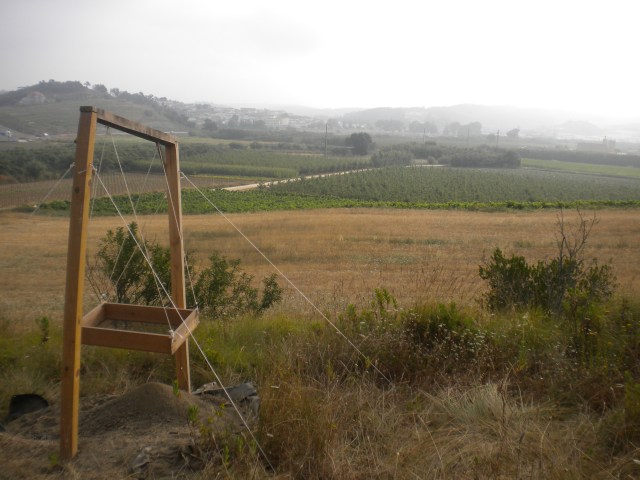
View from the site of Bolores, 2010.

View from the site of Bolores, 2010.


Understanding prehistoric identities
At Bolores, one of the overarching excavation goals was to figure out how many children had been buried at the site relative to adults. Understanding the age composition of the collective burial would provide information about both demography and social practice, illustrating which age groups were subject to high mortality, and untangling how they were treated at death. Because human bone at the site was relatively fragmentary, the easiest way to address this question was by examining all of the teeth recovered from the dig.

Besides allowing bioarchaeologists to estimate how many people were buried at a specific site, teeth also provide an indication as to how old they were. Both adult and baby teeth exhibit relatively regular patterns in development and their sequence of eruption. Accordingly, if a site contains entire handfuls of adult third molars (also known as wisdom teeth) but no baby teeth, it is likely that the burial did not contain children. Perhaps children or infants were being buried elsewhere because of their age – in many societies, ‘personhood’ is not attained until later childhood, after specific cultural and developmental rites of passage like weaning or menarche have occurred. The Romans, in particular, were notorious for burying infants in spaces distinct from the burial grounds of adolescents and adults – tucking them into walls, nestling them beneath barns and interring them under kitchen hearths – all because their souls were believed to be too nascent and transitional to withstand full formal burial. In contrast, historic cemeteries in North America underscore the social and cultural importance of children, their costly tombstones and inclusion in graveyards demonstrating that they were considered to be social beings on par with adults. The proportion of infants and children buried in a particular area thus gives clues to not only the demographic pressures faced by prehistoric populations – whether death was more likely to occur just after weaning, for instance – but also reveals the ways in which ancient peoples structured their societies and how they conceived of personhood itself.

Preliminary osteological analysis of the Bolores remains revealed a curious pattern. By examining the number and development of baby teeth and the wear on fully formed permanent dentition, bioarchaeologists established that over half of the individuals buried at the site were children or adolescents, individuals who were under eighteen years old when they died. While this strikingly high number of young individuals could reflect the actuality of past demography, in which childhood mortality was high, it could also be related to the project’s rigorous excavation methods. Digging slowly, fine-screening for loose teeth, and diligently plotting the location of even the smallest bones allowed members of the team to virtually recreate the site, associating bones and teeth to produce an accurate estimate of how many young people had been buried there. However, whether an artifact of a past reality or the result of careful excavation methods, the high number of children at the site did reveal a very important facet of Late Prehistoric life in early Iberia.

Later prehistory in Spain and Portugal, circa 5,000 to 7,000 years ago, was a time of significant social change. The archaeological record attests to the increasing volume of communication and degree of interconnectedness between communities scattered throughout the Mediterranean and North Africa. Exquisite artifacts like delicate hairpins, carefully carved rabbit figurines, and hilts for intricate quartz daggers were crafted from pearl-sheened ivory and verdantly gleaming variscite stone, highlighting the increase in long-distance trade in exotic materials. People were slowly beginning to congregate on the landscape in larger groups, building bigger communities that would have required more sophisticated strategies for dealing with the daily pressures of living a mere hands breadth away from family, friends, neighbors, and potential enemies. In other places and at other times, these kinds of pressures led to the development of rigid schemes of social ranking, where specific social groups grasped the reigns of opportunity and held firmly to power for centuries – Game of Thrones for the prehistoric set. However, research at Bolores and other sites like it points to the existence of an alternate strategy. Despite the burgeoning size of towns and villages, and the increasing interconnections between vast swathes of the Old World, these Neolithic and Copper Age peoples still buried all members of their community together, in large mass graves that were often demarcated by megaliths or tucked away into natural landscape features like caves. Bioarchaeological analysis indicates that such inhumations provide an honest cross-section of society, with everyone from fragile toddlers to hale and hearty septuagenarians folded into the sedimentary embrace of the sun-baked soil.

A few hundred years later, during the subsequent Bronze Age, this approach would change drastically. Mortuary rituals began to underscore the individual and their accomplishments, rather than the collectivity of the community from whence they came. Instead of interment in a cave filled to the brim with ancestors, people were now buried beneath their own houses, with their own gender-specific sets of grave goods. Women were laid to rest accompanied by elaborate hair combs and metal jewelry, while men were interred with swords and other weapons. By unpacking the nature and number of individuals who comprised these burial populations, bioarchaeologists have illuminated the gradual shift in social focus from a long-standing, egalitarian community of which everyone was a part, to a more particular emphasis on the nuclear family and individual accomplishments—a way of life much more reminiscent of our own modern lives.

Crouched in the hot white Iberian sunlight on the steep slope of that hillside excavation, I had little understanding of the wealth of information human skeletal remains were able to provide about the past. However, that initial spark of communion, and sense of deeper connection to the people who had inhabited this rugged landscape five thousand years before my arrival, was an experience that fundamentally altered my approach to the past. Perhaps, as Robert Frost so eloquently contended “there’s something the dead are keeping back”. Fortunately, through the diligent translation of the information inscribed in human skeletons into concrete knowledge about life in the ancient world, bioarchaeology provides one means of gently encouraging the dead to relinquish some of the secrets they are so tightly holding onto.

 Image Credits:  Photos from Bolores, 2010 and 2012 field seasons.


Posted in Archaeology, Bioarchaeology, Longform | 2 Comments

Osteology Everywhere: Via Verde Edition

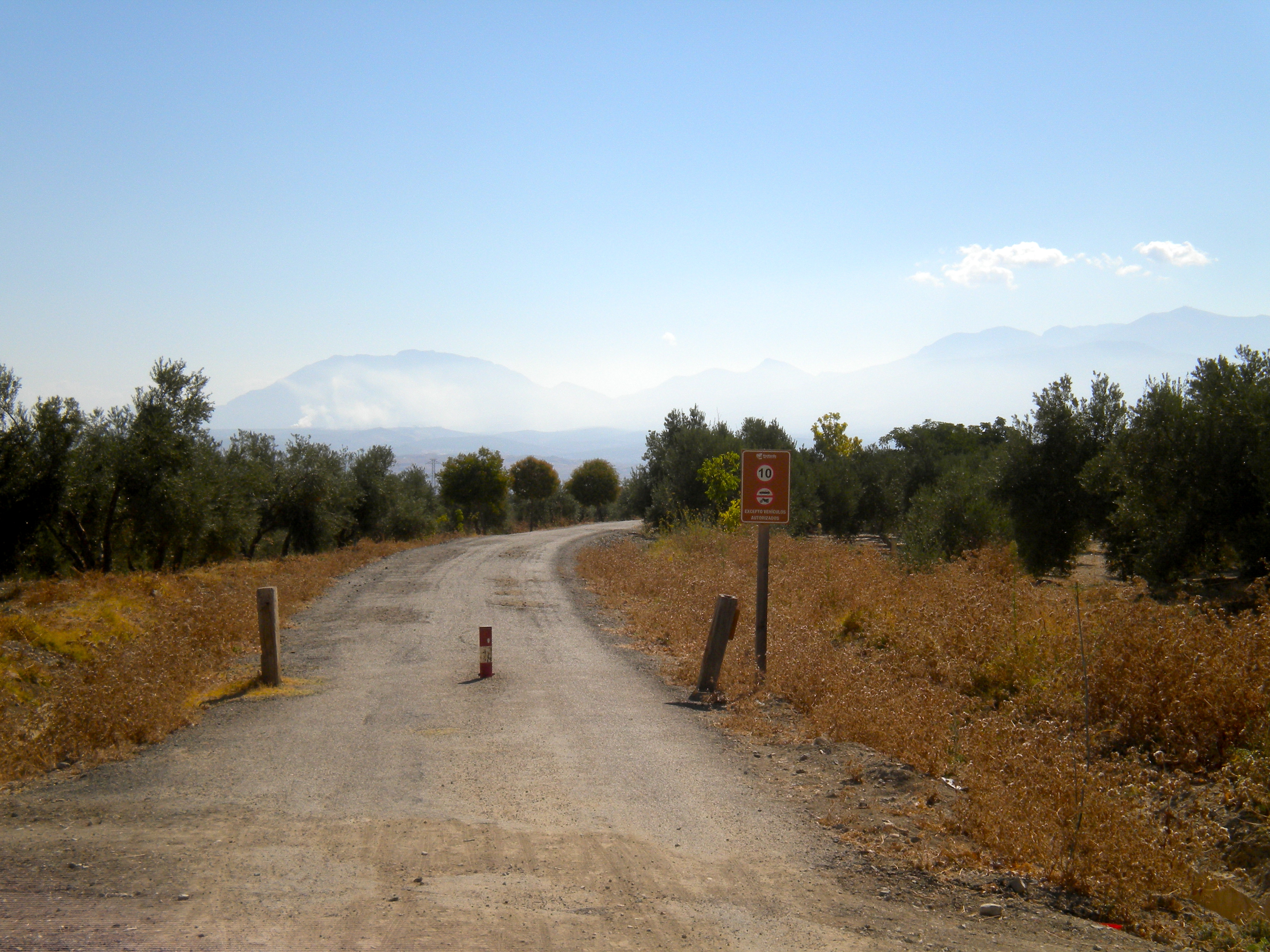
This is the view currently visible outside of my window:
The White GraveFor a variety of reasons, I’m spending a few months in a city that is, quite appropriately, locally dubbed “The White Grave”. What with the weather and the monotonous slog that is the second chapter of my dissertation, lately I’ve spent a lot of time fondly reminiscing about the overwhelming heat of Andalucían summers.

Given the blog’s recent focus on identifying and siding parietal bones, my Spanish daydreams reminded me that there’s an Osteology Everywhere post I’ve been meaning to put up for quite awhile. So in the spirit of sharing memories of summer given the particularly inclement weather everyone appears to be having this week, here are some photos of Spain.

Via Verde, looking back towards Jaén

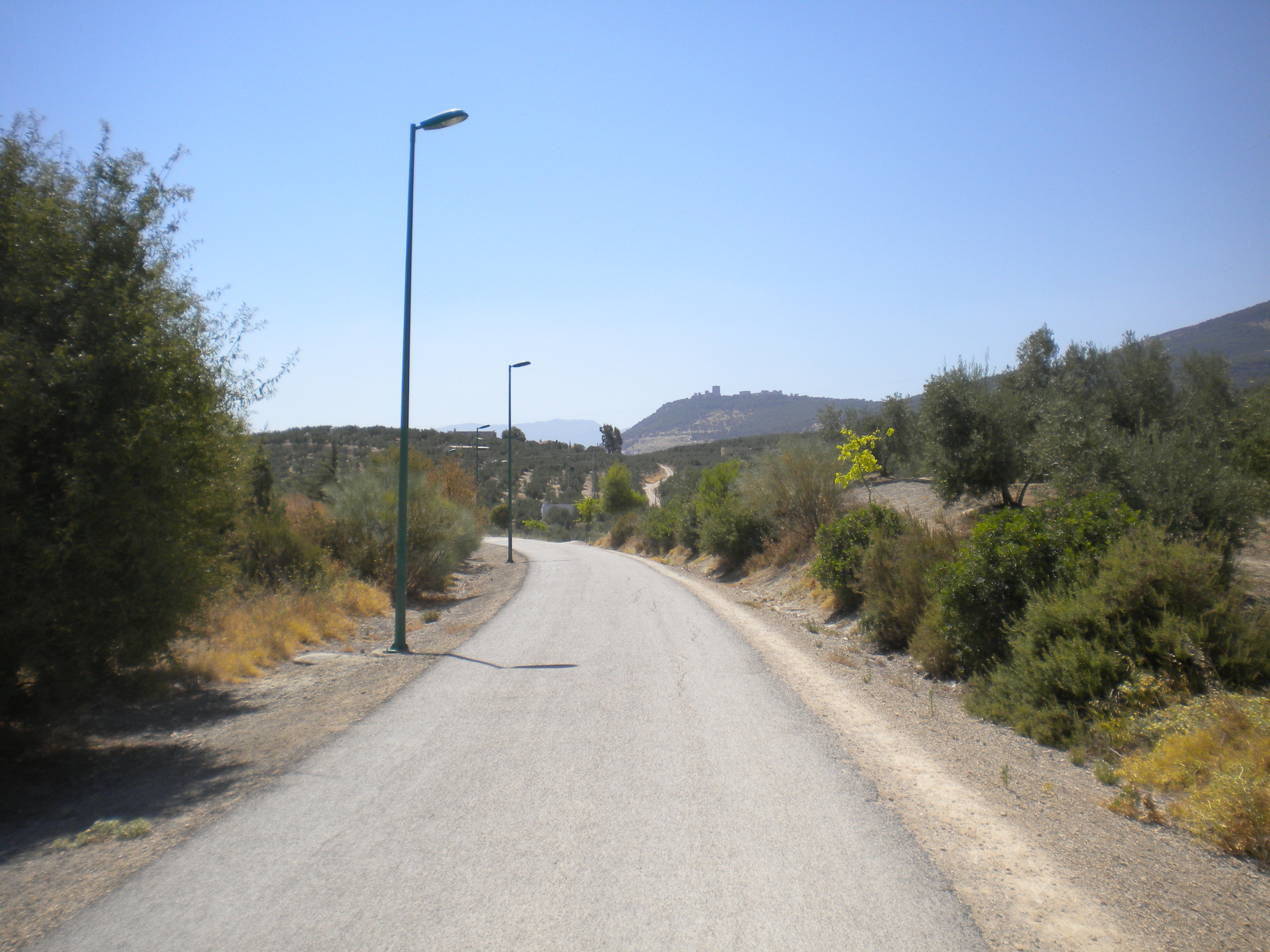
The Vía Verde is a system of walking paths that snake across various provinces in Andalucía, including Córdoba, Seville and Cádiz. There are also a number of treks  that run through central and northern Spain as well, all of which are run by the Fundación de los Ferrocarriles Españoles (Spanish Railway Foundation), since all of these pedesterian and cycling paths are converted railway lines. The route just outside of Jaén starts in the Fuentezuelas neighborhood and runs some 55km southwest across the province. Given the preponderance of olive trees in the local landscape, it is appropriately named the Via Verde del Aceite, as aceite means oil and Jaén is one of the largest producers of olive oil in Spain.

Via Verde with Castle
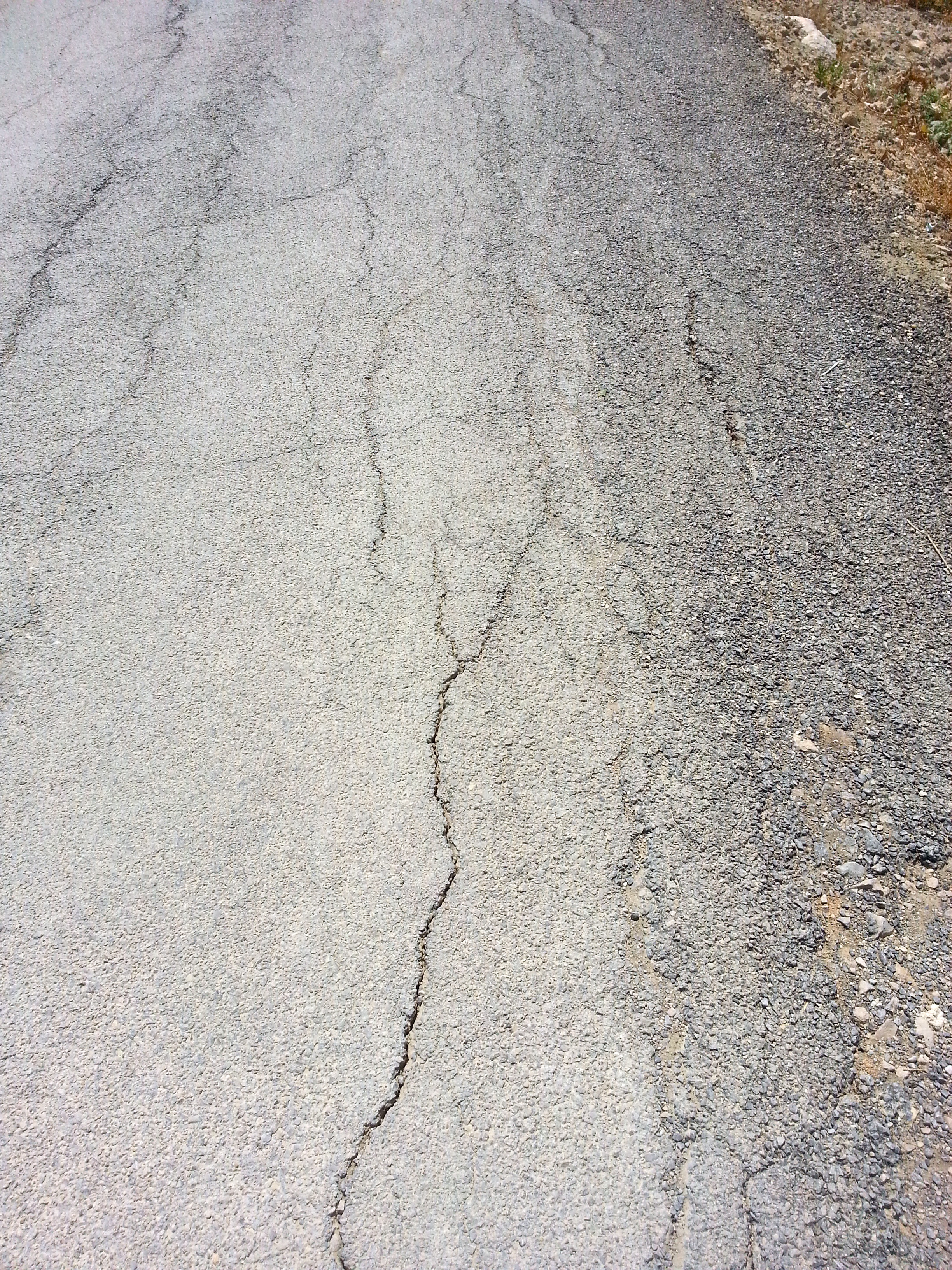
This past summer I’d usually head out along the Via Verde on my off-day, leaving in the mid-morning before the temperatures hit their customary high 30 zenith, and revelling in the chance to be outdoors. However, as was customary with my summer, I couldn’t always escape osteology. Taking a look at the pavement that lined the start of the trail, I was immediately reminded of mengingeal grooves, the reticulated channels that line the endocranial surface of the parietals to make space for the mengingeal arteries.

Alright. That particularly nerdy note concludes our series on the parietals. Stay warm and have a good weekend everybody!


Posted in Osteology, Osteology Everywhere | Tagged , , , , , | 1 Comment

Animal Scavenging and Scattering and the Implications for Documenting the Deaths of Undocumented Border Crossers in the Sonoran Desert

A few days ago an article that I co-authored with three other researchers from the University of Michigan finally went live online.  This foray into forensic taphonomy was part of a larger project run by Jason De León called the Undocumented Migration Project, or UMP. The UMP uses a suite of archaeological, ethnographic and forensic approaches to better understand the broad-scale implications of the undocumented migration process along the southwestern border of the United State. To borrow from the far better articulated description on the UMP website:

“Started in 2009, the Undocumented Migration Project [UMP] is a long-term anthropological analysis of clandestine border crossings between Northern Mexico and Southern Arizona…The UMP uses a combination of ethnographic and archaeological approaches to understand various aspects of unauthorized border crossings including the many forms of violence and suffering that characterize the process, the distinct experiences of migrant sub-populations (e.g., women, children, LGBT, non-Mexican nationals), and the evolving material culture associated with crossing. By combining ethnographic work in Mexico with archaeological research in Arizona, the UMP has improved our knowledge of this highly politicized and poorly understood process and demonstrated how an archaeological approach can provide new insight into a contemporary social phenomenon.”

I’ve also written about the larger importance of the Undocumented Migration Project in a previous post.

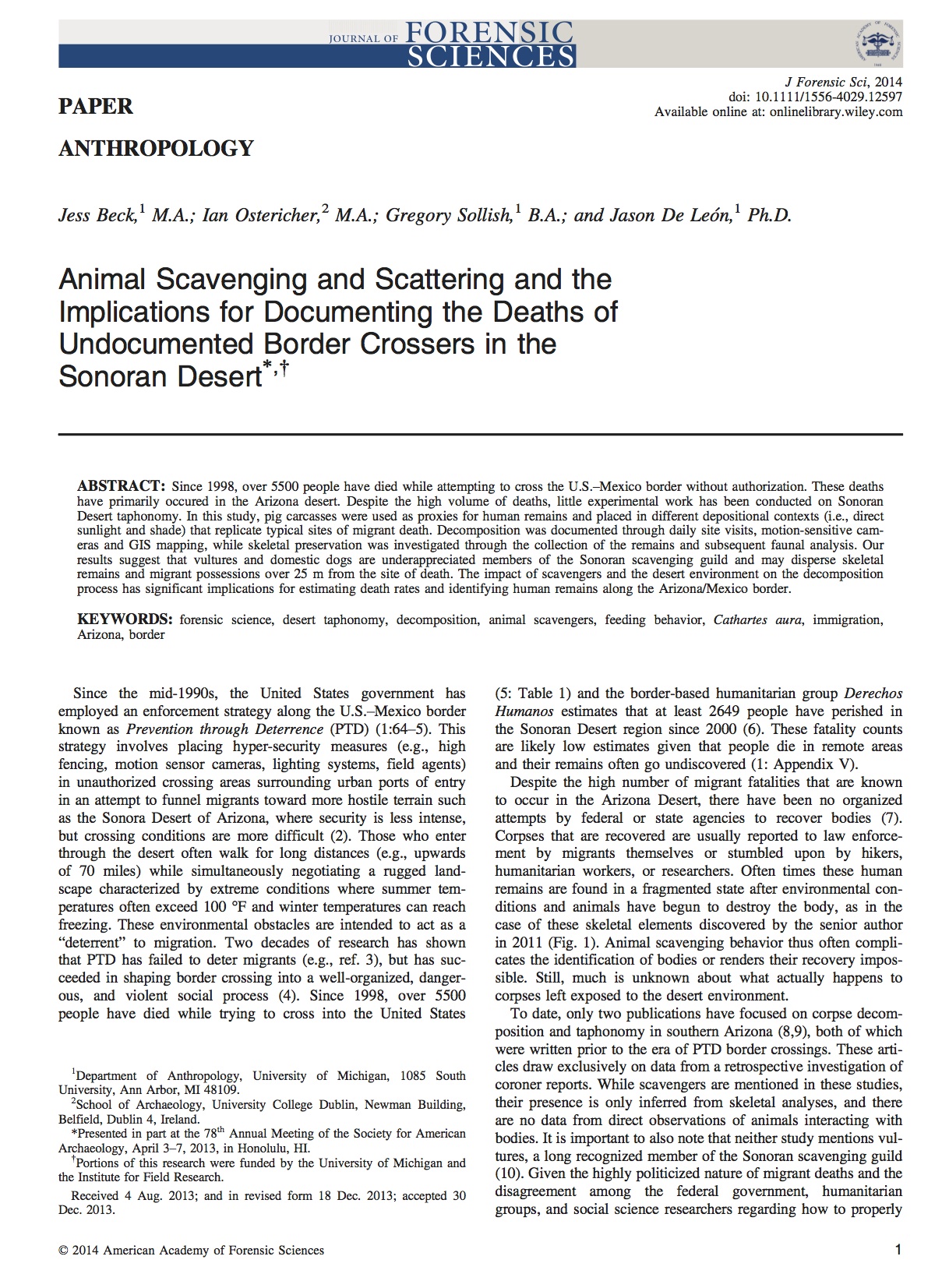
Beck, Ostericher, Sollish and De León 2014 - Animal Scavenging and Scattering and the Implications for Documenting the Deaths of Undocumented Border Crossers in the Sonoran Desert
The paper itself focuses on the first season of forensic taphonomic research at UMP. Our project is trying to better understand what happens to human bodies that are abandoned in the Sonoran Desert during the process of border crossing, which has been the fate of more than 5500 people in the past 16 years. We used pigs as proxies for human bodies (a customary practice in forensic research), and carefully documented the taphonomic factors (e.g. animal activity, temperature) that affected the process of decomposition and dispersal of remains and artifacts.  The first field season demonstrated the extent to which animal activity affects bodies that are left out in open desert conditions, identified some of the most active members of the Arizona desert scavenging guild, and drew important conclusions about logistical considerations like search radii and the distance animals can move personal effects.

This research is particularly important given the continuing debates about immigration policies and the Prevention Through Deterrence strategy in the United States. Last summer a second round of taphonomic experiments took place, and combined results from both seasons are due to be presented by Kate Hall at a session of the Society for Historical Archaeology in January 2015.

Here’s the pdf: Beck et al., 2014 – Animal Scavenging and Scattering and the Implications for Documenting the Deaths of Undocumented Border Crossers in the Sonoran Desert

The article can be cited as:

Beck, J., Ostericher, I., Sollish, G. and De León, J. (2014), Animal Scavenging and Scattering and the Implications for Documenting the Deaths of Undocumented Border Crossers in the Sonoran Desert,. Journal of Forensic Sciences. doi: 10.1111/1556-4029.12597

and early view can also be accessed online at the Journal of Forensic Sciences.

Posted in Fauna, Forensic Anthropology, Publications | Tagged , , , | 3 Comments

How to identify and side parietal bones

When analyzing human bones (or taking your first osteology course), you will occasionally be presented with bags brimming with large numbers of cranial fragments that you are tasked with sorting, identifying and siding. When I took my first intensive osteology course, we actually started with the skull and worked our way down through the rest of the body.  I remember being overwhelmed by the multitude of cranial bones (there are twenty-two, and some are paired!), and losing hope that I would ever pass a bone quiz. However, as with any other component of osteology, when it comes to identifying cranial bones it helps to divide the process into a series of simple steps.

Articulated right parietal.

Articulated right parietal.

In this post, I’ll share everything I know (or rather, all the tricks that I customarily use) when identifying and siding parietals. The visual aids and feature summaries are condensed into a four-page pdf document at the end of the post, for easy portability to and from labs where you might not have internet access

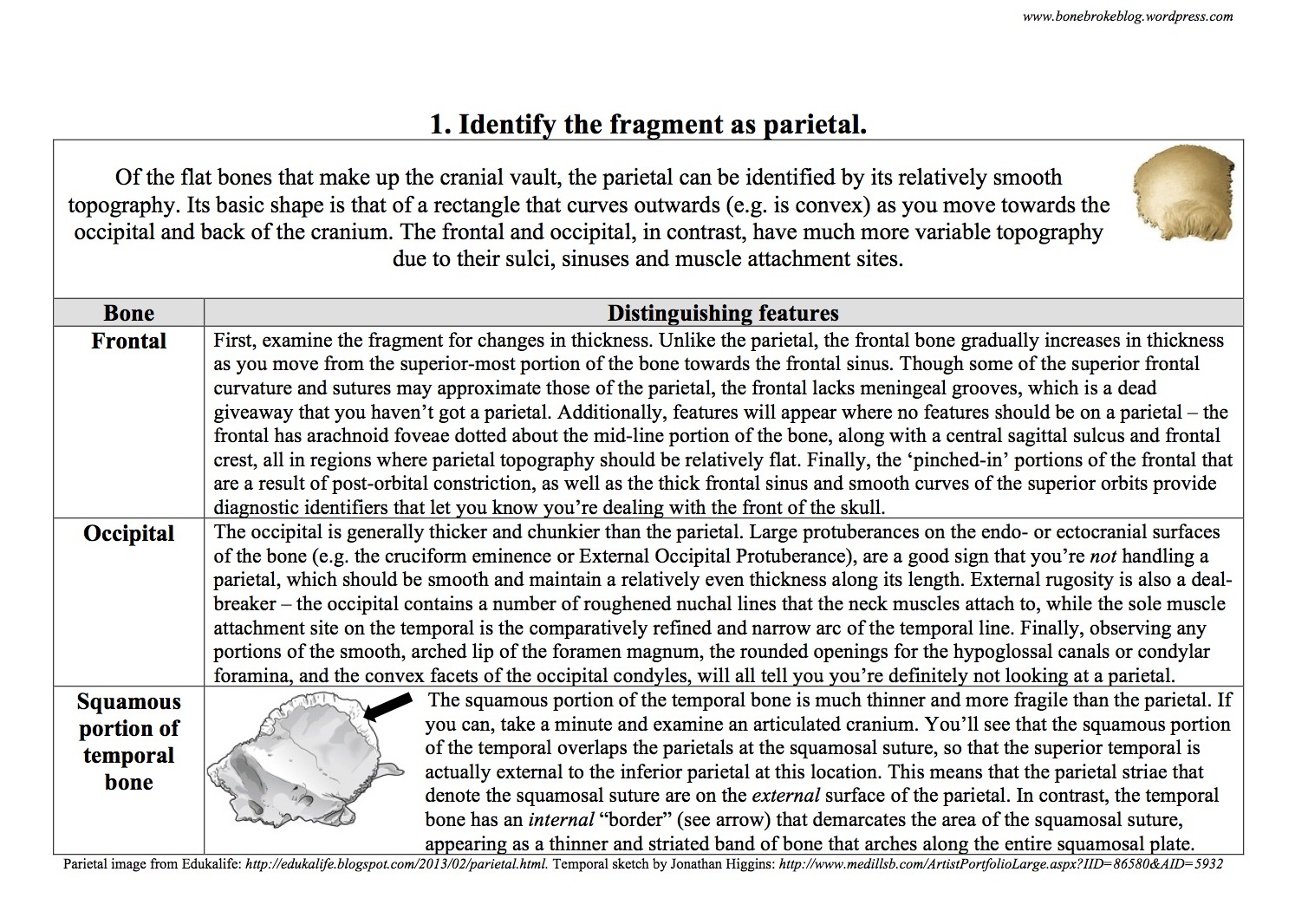
Step 1: Identify the fragment as parietal                                                                         The parietal is a broad, flattened rectangle, that appears to have been hammered out internally so that it curves outwards. As such, the only other cranial bones you’ll likely confuse it for are the occipital, frontal, or the squamous portion of the temporal. The rest of the cranial bones (e.g. the sphenoid, petrous portion of the temporal, the vomer) are either too fragile or have distinctive undulating topography that will immediately distinguish them from the flatter bones of the vault. Use the chart below to help differentiate the parietal from other cranial bones.

Distinguishing parietals from other flat cranial bones

Step 2: Examine any preserved borders and angles of the fragment.
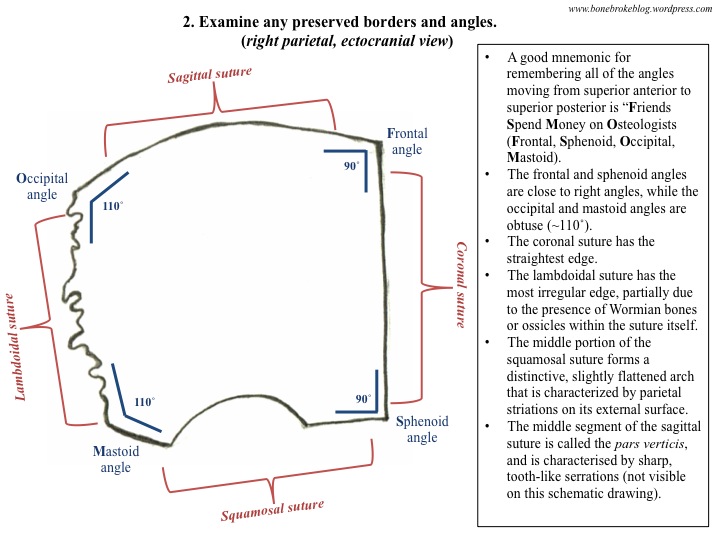
If the parietal were a country it would be entirely landlocked – each of its borders is composed of a suture that fuses to other bones of the cranium. The four sutures that define the parietal boundaries are sagittal (most superior), coronal (most anterior), occipital (most posterior) and squamosal (most inferior). The areas where these sutures meet are called angles and, unsurprisingly, there are also four of these – the frontal, sphenoid, mastoid and occipital.

Step 2
Step 3: Examine any external features that are preserved.
The most distinctive features on the external, or ectocranial surface of the parietal are the parietal striae, distinct thin furrows that make it seem like someone has raked a sharp comb up and back along the squamosal border of the bone. However, the temporal lines, parietal foramina, and parietal bosses are also useful for orienting and siding fragments of the bone.

Step 3

Parietal foramina and parietal bosses

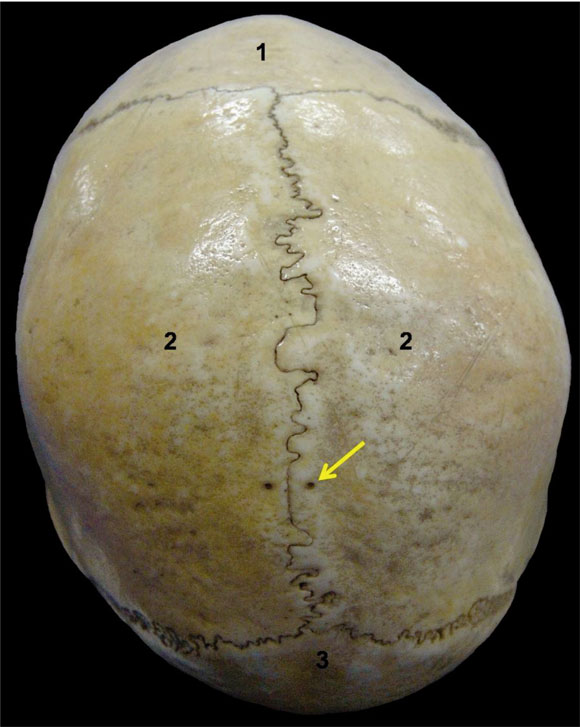
If you’re trying to get a better handle on the orientation of the parietal bosses and the location of the parietal foramen, examine an articulated cranium in superior view. As you can see in the photo below (where “1” is anterior and indicates the frontal, and the “2”s indicate the left and right parietals), the bosses are the areas where the parietals bulge out posteriorly (this convexity is most easily observable to the right of the “2” label), and the foramina are the paired black holes indicated by the yellow arrow.


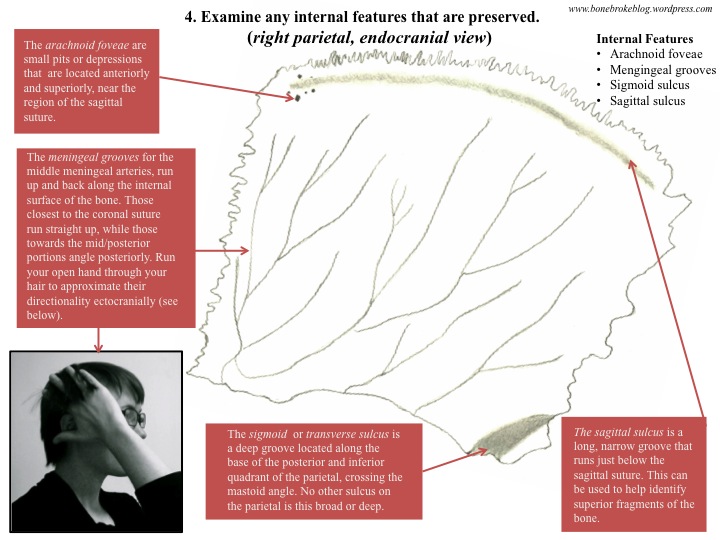
Step 4: Examine any internal features that are preserved.                                    The meningeal grooves are distinctive, branching channels that appear on the internal, or endocranial, surface of the parietal. These are the most distinctive features of the bone, and can easily be used to distinguish parietal fragments from any other cranial vault fragments. That said, the arachnoid foveae and sagittal and sigmoid sulci can also be used to help you orient and side any fragments you do have.


Step 4

Finally, if you’re trying to determine whether the fragment you are examining is adult or subadult, here are a few helpful tips:

  • The parietals of children and young adults have very sharp and distinct sutural “teeth”, because their sutures aren’t fully fused. These teeth  are pointier in children, and duller in adults;
  • The parietal striae of subadult parietals are less pronounced because the temporal bones have not yet fully fused to the inferior parietals;
  • The temporal lines on subadult parietals are less obvious;
  • Overall the cranial vault is much thinner and more delicate in subadults than in adults.

The pdf of my guide to the parietals can be found below:

Bone Broke Guide to Identifying the Parietals

If anyone is interested, I’ll be posting a parietal specific bone quiz to test your knowledge of this cranial bone sometime next week. Until then, happy weekend!

References: I double checked all my tips and tricks with White and Folkens’ Human Bone Manual (2005), and my Human Osteology Lab Manual from the ASU Bioarchaeological Field School in Kampsville, Illinois (2011).

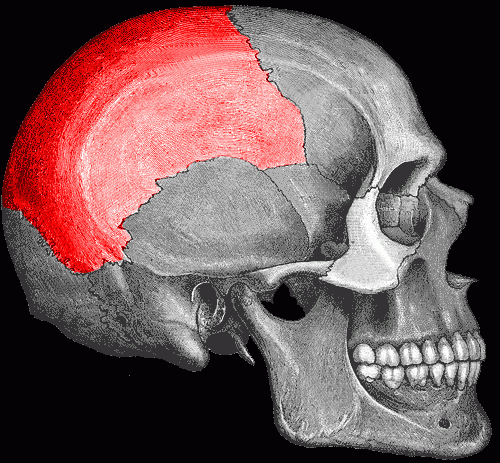
Image credits: Parietal is highlighted in red is from hscripts.com, here. Superior view of the parietals, with parietal foramina indicated by a yellow area, can be found at the International Journal of Morphologyhere. Bones pictured were photographed at the Museo de Jaén in summer 2013.

Posted in Cranium, Osteology | Tagged , , | 2 Comments

Syllabus: The Science of Skeletons – Introduction to Bioarchaeology

Last month I received some excellent news. My course proposal, which I assembled somewhat manically during the thick of data collection this past summer, was accepted by the Department of Anthropology. This means that I have the opportunity to teach a summer course at the University of Michigan in July and August 2014 (as long as I can recruit the requisite number of students), and it also means that after six semesters of teaching, I’ll finally be able to teach bioarchaeology.

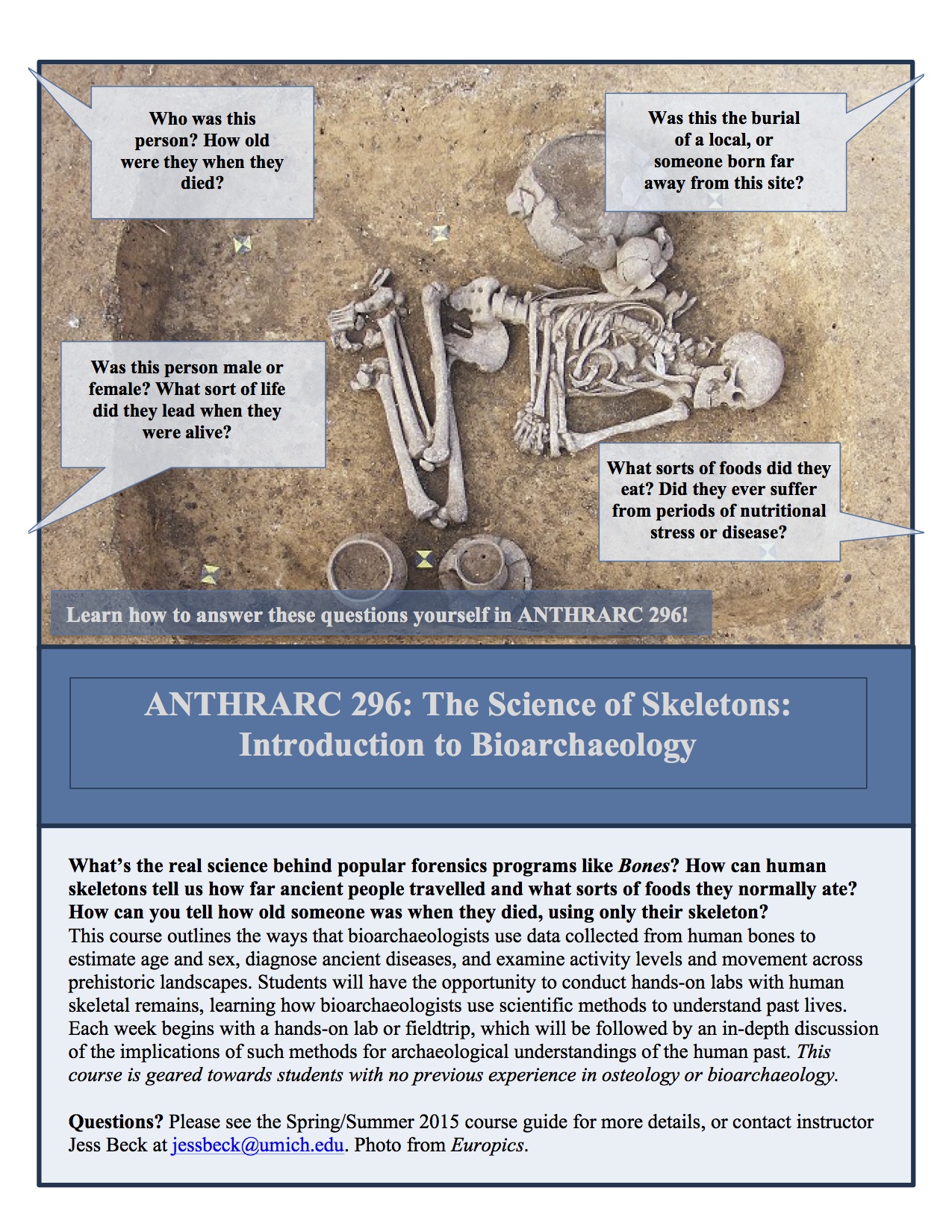
Course flyer

I’ve acted as a Teaching Assistant for a number of different anthropology courses before, including introduction to primatology, human behavioral ecology, introduction to biological anthropology, nutritional anthropology, and human evolution. While some of the more paleoanthropology flavored classes have allowed me to create labs that incorporate teaching osteology, I’ve generally led a pedagogical life sadly devoid of bones. No more!

Syllabus - first page
I’ve titled the course “The Science of Skeletons: Introduction to Bioarchaeology“. A course description can be found below, and I’m attaching pdfs of the course flyer and syllabus at the end of this post. If you’ve ever taught bioarchaeology courses, or remember particularly excellent classes from when you took the subject yourself, I’m all External Auditory Meatuses. Any suggestions about readings, labs, particularly insightful videos or clips are all welcome. I just hope that the students are as excited to take this course as I am to teach it!

Course Description: Bioarchaeology is the study of human skeletal material from archaeological sites, and this course will outline the ways that bioarchaeologists use data collected from human bones to estimate age and sex, diagnose ancient diseases, and examine activity levels and movement across prehistoric landscapes. Students will have an opportunity to conduct hands-on labs with human skeletal remains, learning how bioarchaeologists use scientific methods to understand past lives. Each week will begin with a hands-on lab or fieldtrip, which will be followed by an in-depth discussion of the implications of such methods for archaeological understandings of the human past. We will explore how to estimate the age and sex of individuals, to identify prehistoric diseases, to estimate stature, and to make predictions about an individual’s ancestry. The course will also outline how bioarchaeology can reveal important information about key prehistoric social transformations– specifically focusing on the costs and benefits of the transition to agriculture – and will also touch upon the ways that bioarchaeology and its findings are portrayed in different contemporary contexts such as museum exhibits and the popular media.

Note: I’ve updated the syllabus since I first drafted it, so the syllabus pdf below is updated.

Course Flyer – The Science of Skeletons: Introduction to Bioarchaeology

Syllabus – The Science of Skeletons: Introduction to Bioarchaeology

Posted in Bioarchaeology, Syllabus, Teaching | Tagged , , , , | 4 Comments

Bones & Culture: Huesitos chocolate in Spain

Milka HuesitosI’ll admit, American candy bars often have names that are slightly confounding. To my mind, the combination of peanuts and caramel has never inspired derisive amusement, a milk chocolate and nougat confection does not immediately provoke contemplation of the vast wonders of the galaxy (or, for that matter, the red planet),  and what whipped nougat has to do with 18th century French guardsmen is beyond me. British and Canadian offerings are a bit better – at least Aero bars, Crunchies and Coffee Crisp all give the consumer a hint as to the contents of their packages (though I’ll freely concede I have no idea what reaction the moniker Wispa is supposed to evoke).

Huesitos McFlurry

In Spain, one of my favorite candy bars is called Huesitos. Incidentally, it’s also one of the country’s most popular ice cream flavors. Now, when it’s 40˚C and you’re craving something sweet, I’m not sure the first thing that leaps to mind is “little bones”, but that’s what the name of this chocolate translates to in English. Hueso means bone, and –ito  is a diminuitive used to mean ‘little’, as in the popular epithet pobrecito (“poor little one”).

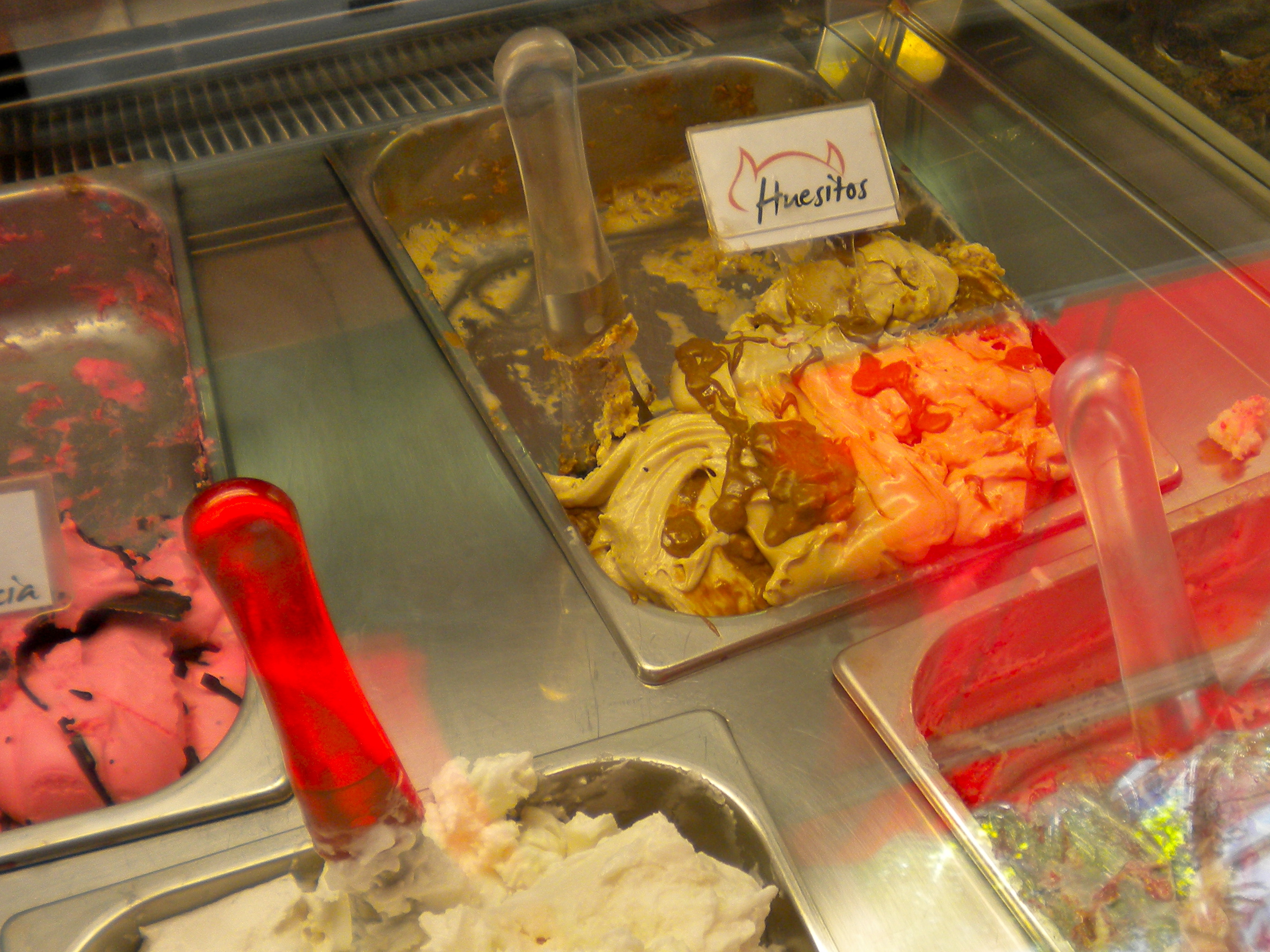
Huesitos at Heladería Tentación in Jaén, Spain

Huesitos is a fairly simple candy bar, consisting of multiple layers of thin, crispy wafers that are sandwiched together with chocolate cream, the whole ensemble dipped in milk chocolate to bind it together. In essence, the candy bar is a little bit like a KitKat, though flatter and wider and without the thick chocolate bulwarks characteristic of the sides of  the latter confection. The candy is popular enough that a number of Spanish recipe sites show you how to make them at home, as in the image below.

Homemade huesitos

I was initially tickled by the appropriateness of the chocolate to my professional interests – how could a bioarchaeologist not love a candy that’s named after skeletal elements? However, while researching the etymology of the name using only the most refined and high-brow academic resources (read: Wikipedia.es), I stumbled upon some interesting facts about the history of the candy bar itself. Huesitos were initially developed in 1975 by family-owned company Hueso Chocolates, whose name derived not from a morbid fascination with human remains, but from the eponymous Francisco Hueso, the entrepreneur who founded the business in 1862.

Despite the name’s familial origins, the company did decide to capitalize on the osteological undertones of the product when marketing it to consumers. Perplexingly, they chose to do so using an advertising campaign with troublingly racist overtones – their cartoonish ads depict a caricature of a small “African” child (Wikipedia’s assessment of ancestry, not mine) sporting a leopard-skin loin cloth, who has a bone woven into his hair, exclaiming “That….that chocolate bone!”.

I could give the company the benefit of the doubt – perhaps Francisco Hueso travelled widely in the areas Melanesia where bone septum piercings are popular, and so the depiction is actually meant to reference his worldly interest in the anthropology of body modification. However, this seems highly unlikely. The visual reference that the Hueso company was far more likely keen on invoking was that of the popular television show The Flintstones, as that program premiered some 15 years before their candy bar was invented, and the get-up worn by the child depicted in the ad campaign is suspiciously similar to the easily recognizable outfit of Pebbles, one of the show’s young protagonists. The Flintstones’ specious portrayal of Paleolithic lifeways notwithstanding, the parallel being drawn is unpleasantly familiar to any anthropologist as it evokes a “living fossil” portrait of current human groups, one which implies that contemporary non-agricultural lifeways are anachronistic lost worlds that are holdovers from our hunter-gather human past. More explicitly, it signals that the amorphously “African” individual being depicted is a throwback to an earlier stage of human evolution, rather than a member of a modern culture that has been subject to the same historical processes of change  as contemporaneous agricultural societies. And let’s not even get started on how sadly appropriate it still is in this day and age to draw attention to the implicit exploitation of African children that major chocolate exporters rely on to market cheap candy to the developed world.

However, the Huesitos story doesn’t end there. In addition to illuminating the insidious ways that racism pervaded advertising in the late 20th century, this saga also illuminates the increasingly large purvue of the capitalist juggernauts that are rapidly becoming ubiquitous in the modern world. While Hueso was initially family-owned company, in 1989 the company was bought out by Cadbury-Schweppes, a British brand that was itself bought out by Kraft Foods in 2010, which is owned by the Mondelez Corporation. Which is, of course, owned by the Scheinhardt Wig Company.

The reason this chain of ownership is relevant to the status of Huesitos today is because up until 2013, the candy had been made in Ateca, a municipality located in the province of Zaragosa, Spain. However, in April 2013 Kraft Foods proposed moving the factory to Poland. This caused a predictably loud outcry among the citizens of Ateca, who started a social justice campaign agitating against the closure of a factory that had been a key thread in the local socioeconomic fabric for more than one hundred years.
Ateca protest leaflet

The agitators garnered over 16,000 signatures using the social change platform Change.org. Protesters used the hashtag #AtecaEsChocolate to promote their cause on Twitter, and took to the streets to participate in more traditional forms of protest.

Ateca ProtestsWhen even handsome locally-born footballers started to get involved, it became clear that the social change campaign was getting serious.

Ángel Lafita
In the face of all of the uproar, Mondelez abandoned their attempts to relocate the factory. Clearly deciding to wash their hands of all contumacious Zaragosan laborers, they instead sold the business to Spanish chocolatier Chocolate Valor  (if you’ve visited Spain, they’re the ones who make the massive blocks of “chocolate a la taza” that are used for churros and breakfast chocolate).

Huesitos - Valor brand

For now, things appeared to have settled down for the Huesitos brand. Instead of acting as a reminder of an era of overtly racist advertising, or a serving as a vanguard in the fight against the encroachment of monstrous corporations on local economies, Huesitos have reverted to something even more important: functioning as the sole appealing candy bar sold in the vending machines of Media Distancia trains in Andalucía.

Clearly I jest. However, it is fascinating that a post that was initially intended as a one-paragraph missive to a quirky osteological sobriquet became an exploration of various forms of cultural and economic oppression, incarnated in a simple candy bar. What a complicated, confounding world we live in.

On that note, time to get back to my equally complicated and confounding dissertation.

Image Credits: Photo of the Milka candy bar from Kraft, here.  Image of Huesitos McFlurry found here. Homemade huesitos photo taken from Recetas Confidenciales, here. Image of original troubling Huesitos ad found here. Ateca protest flier found here, and protest photo found here. Photograph of Zaragosa-born Ángel Lafita found here. Huesitos – Valor brand – found here.

Posted in Bones & Culture, Travel | Tagged , , , , , , , | 2 Comments

Terminado

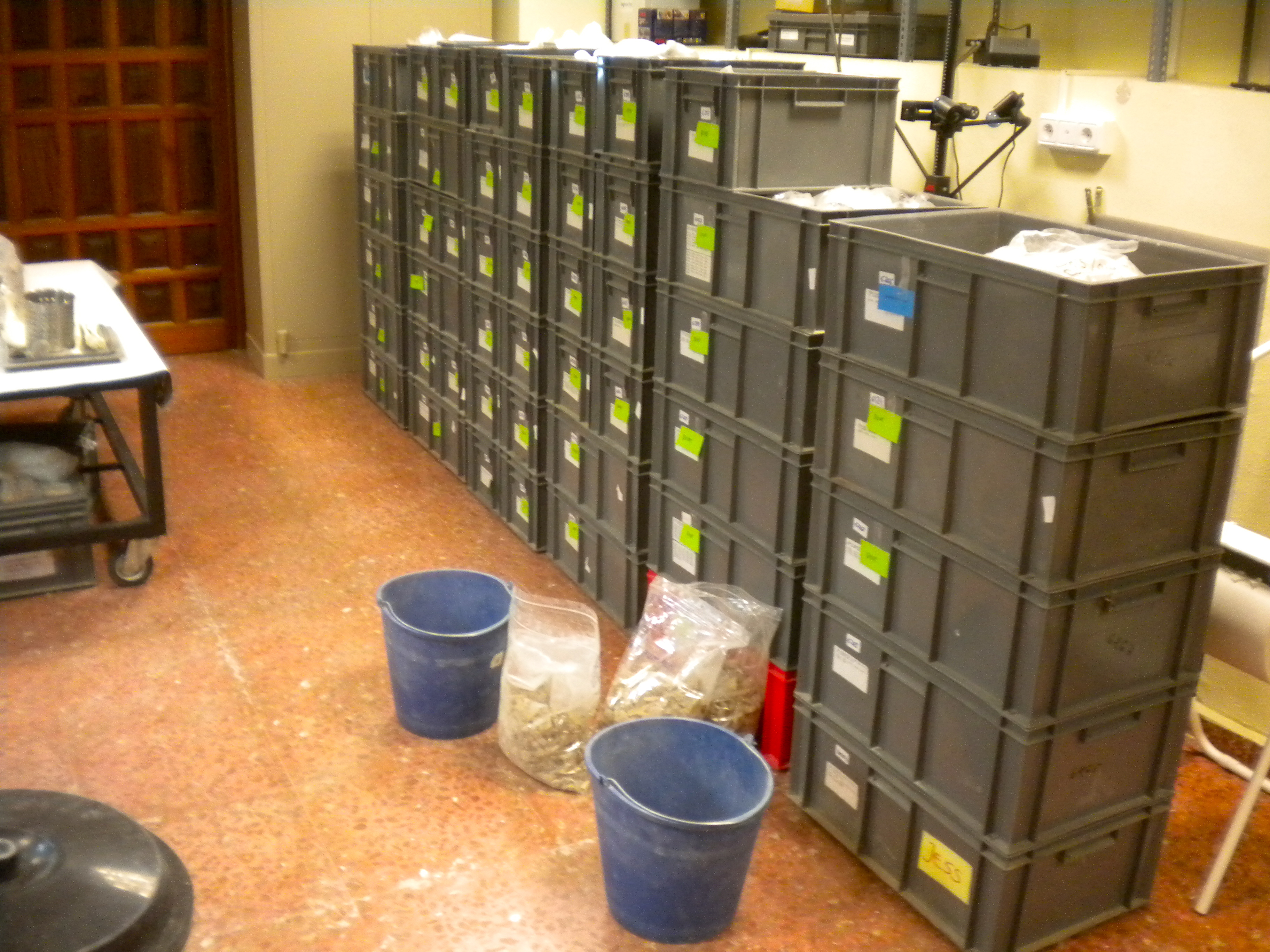
  • After analyzing 4,784 human teeth (~3000 of which were loose),
  • Identifying and examining 2,480 individual bones,
  • Conducting a full bioarchaeological analysis of ~100 pounds of human bone and ≥80 individuals from two necropolises at Marroquíes Bajos,

Marroquíes Altos materials

  • Screening >700 pounds of human bone and sediment for loose and articulated dentition,
  • Completing a dental analysis of ≥180 individuals from the necropolis of Marroquíes Altos,
  • Locating and scanning four site reports at the Regional Ministry of Culture,
  • Pulling samples of 113 mandible and molars for isotopic analysis and AMS radiocarbon dating,
  • spending eight months in Jaén over the course of two consecutive years,
  • and receiving a mountain of assistance from committee members, regional archaeologists, museum colleagues, and friends,

Catedral de Jaén

I am finally done with my dissertation data collection.

I think we all know what time it is.

Irreale reward

Posted in Dissertation, Human Remains | Tagged , , , , | 1 Comment